Watering Napa Valley Trees in June: The Early Summer Hydration Guide
June is the month Napa Valley's dry season begins in earnest — and the watering decisions made in the first weeks of June set the trajectory for every tree on your property through October. Water the wrong species and you activate the root pathogens that kill native oaks. Underwater an establishing ornamental or fruit tree and the root system fails to develop the depth it needs to survive August's peak heat. Miss the vineyard root competition window and adjacent trees enter summer already depleted. Most Napa Valley property owners know summer irrigation matters — very few know the species-specific rules that make the difference between trees that thrive through October and trees that fail quietly between July and September. Mike's Tree Service provides certified arborist tree care throughout Napa Valley. This guide covers exactly what each tree type needs in June — and what the most common irrigation mistakes look like before the damage is visible.
Why June Is the Critical Month for Napa Valley Tree Hydration
Understanding why June specifically is the pivotal month requires understanding how trees in this climate manage the seasonal transition:
The soil moisture shift Through winter and spring, Napa Valley's trees draw on moisture stored deep in the soil profile from December through April rainfall. As June arrives, the upper soil profile dries rapidly — and trees must transition from passively absorbing ambient soil moisture to actively seeking deeper water sources or relying on supplemental irrigation.
This transition is where the first stress appears. Trees that don't navigate it successfully — either because their root system isn't deep enough, because irrigation is withheld too abruptly, or because vine root competition depletes the shared moisture zone — enter the hottest months of summer already compromised.
June is peak canopy growth For most Napa Valley tree species, June is the most active vegetative growth period of the year. The canopy develops rapidly in response to long days and warm temperatures. Water dictates how fully that canopy develops — and a canopy that doesn't reach its full development in June will underperform through the rest of summer, with less photosynthetic capacity and less drought resilience as temperatures peak in July and August.
The consequences of getting June wrong compound through October A tree that enters July drought-stressed from an inadequate June irrigation program has reduced sap pressure — the primary defense against both Mediterranean Oak Borer and opportunistic bark pathogens. A tree that enters July with overwatered roots near the trunk has potentially triggered Phytophthora or Armillaria conditions that won't be visible for weeks. June's decisions have a 60 to 90 day consequence window.
The Species That Should Never Receive Summer Irrigation
This is the most consequential tree care rule in Napa Valley — and the one most homeowners violate with the best intentions:
Valley Oak (Quercus lobata) and Coast Live Oak (Quercus agrifolia) — no summer water Native California oaks evolved for Napa Valley's dry summers. They don't need summer irrigation — they're biologically adapted to survive six months without rainfall through deep root systems that access groundwater below the level that dries out seasonally.
Summer irrigation near the root crown doesn't help these trees. It creates the warm, moist soil conditions at the root crown that activate Phytophthora ramorum (Sudden Oak Death) and Armillaria mellea (Oak Root Fungus) — the two pathogens most responsible for established oak mortality in Napa Valley. Neither pathogen is effectively present in dry summer soil around an unirrigated oak. Both become aggressively active when summer moisture is introduced near the root crown.
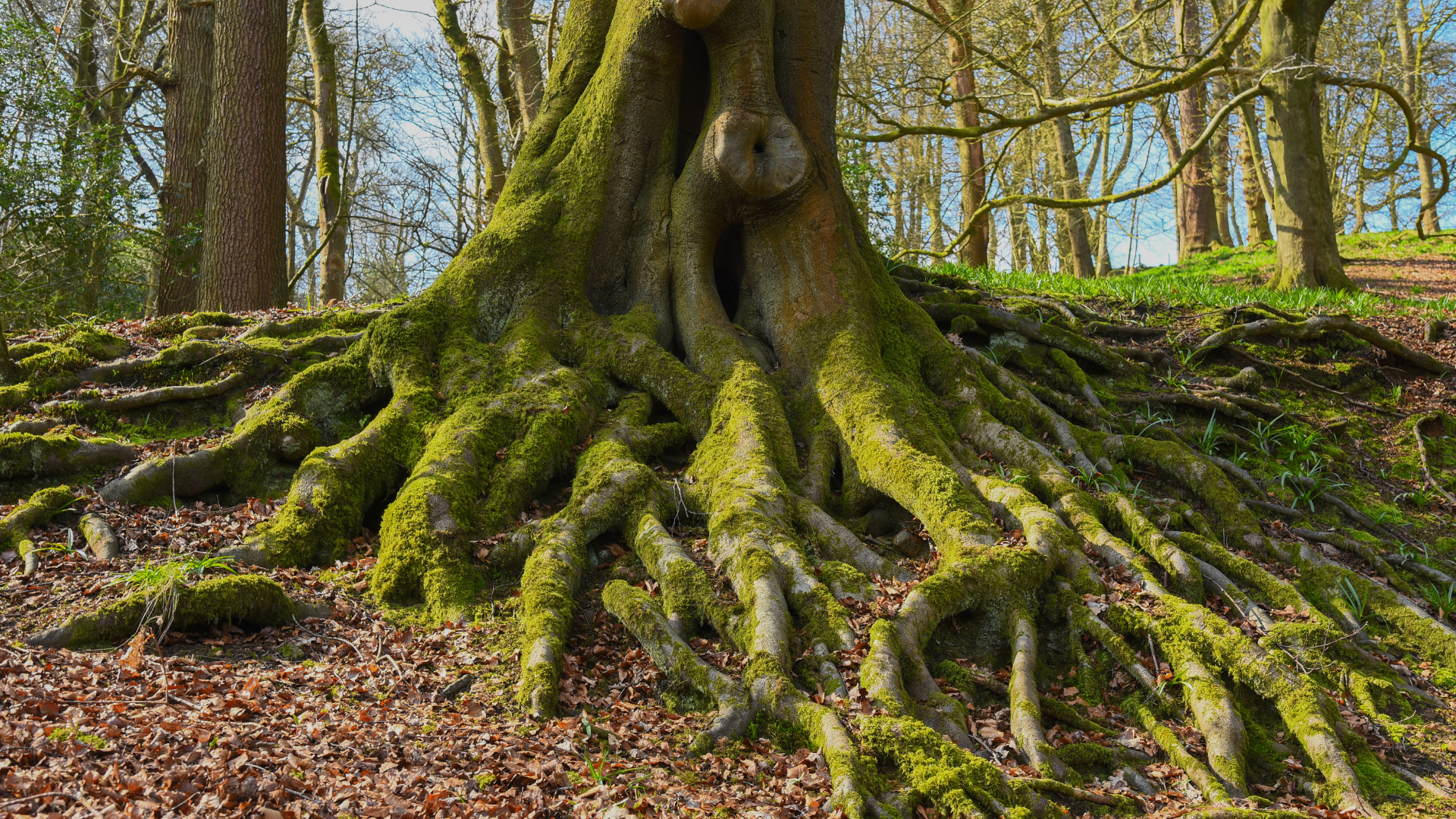
The specific rule: No water within 10 feet of the root crown — the base of the trunk — under any circumstances during summer. Irrigation systems, lawn sprinklers, drip lines, and hand watering should all be redirected away from the trunk zone. If water must be applied during extreme drought, it should be delivered at the outer two-thirds of the root zone — beyond the drip line — not anywhere near the trunk, and only after confirmed drought stress indicators are present.
What to do instead of watering:
- Maintain natural leaf litter beneath the canopy — it provides moisture retention, suppresses competing vegetation, and supports the soil microorganism community that naturally suppresses Phytophthora
- Remove competing water-demanding vegetation from beneath the canopy — ivy, turf, and high-water ornamentals planted under oaks create both moisture competition and Sudden Oak Death carrier risk
- Apply mulch at the drip line — not at the trunk — to retain whatever soil moisture exists from the winter season
How to Water Established Non-Native Trees in June
For ornamental, fruit, and non-native trees that do require summer irrigation — June is the month to establish the rhythm that carries them through the dry season:
Deep watering at the drip line — the correct technique The most common irrigation mistake for established trees is watering at the trunk rather than at the drip line. Active feeder roots are concentrated at and beyond the outer edge of the canopy — this is where water delivers maximum benefit. Water applied at the trunk misses most of the root system and creates moisture conditions at the root crown that favor disease.
Position soaker hoses, drip emitters, or slow-trickle irrigation at the drip line. Allow water to penetrate to 12 to 18 inches depth — the zone where feeder roots are functioning. Slow, sustained application over several hours achieves this; rapid high-volume application produces runoff rather than infiltration.
Volume by trunk diameter: A reliable starting guide for established Napa Valley trees entering their first June irrigation cycle:
| Trunk Diameter | Water Volume Per Session |
|---|---|
| 1 to 3 inches | 10 to 30 gallons |
| 4 to 6 inches | 40 to 90 gallons |
| 7 to 10 inches | 100 to 150 gallons |
| 10+ inches | 150+ gallons |
Frequency by species category in Napa Valley's June conditions:
| Species Type | June Irrigation Frequency | Examples |
|---|---|---|
| High water demand | Every 5 to 7 days | Willows, Birch, fruit trees, non-Mediterranean ornamentals |
| Moderate water demand | Every 10 to 14 days | Non-native pines, Ash, Ginkgo |
| Mediterranean / drought-adapted | Every 14 to 21 days | Olive, Cork Oak, Italian Cypress, California Buckeye |
| Native oaks | No summer irrigation | Valley Oak, Coast Live Oak |
Timing: Water early morning — before 8am — to minimize evaporative loss and ensure the tree enters peak afternoon heat fully hydrated rather than absorbing heat while dry.
The soil probe test: Before each irrigation session — probe the soil 4 to 6 inches deep at the drip line. If still moist, delay the session. Consistent overwatering is as damaging as underwatering for most non-native species in Napa Valley's clay-heavy soils.
Young Tree Watering in June — The Highest-Stakes Month
Trees in the establishment period — their first two to three seasons — face the greatest June risk because their root systems haven't yet developed the depth to access groundwater independently. Every June irrigation decision for a young tree directly affects whether it builds a deep, drought-resilient root system or a shallow, heat-vulnerable one.
The establishment watering sequence:
| Stage | Frequency | Method |
|---|---|---|
| Newly planted (weeks 1 to 2) | Every 2 days | Slow trickle at root ball perimeter for 1 to 2 hours |
| Early establishment (weeks 3 to 12) | Every 3 to 4 days | Soaker hose at drip line, 1 to 2 hours per session |
| First dry season (months 3 to 12) | Once per week | Deep soak at drip line — 1 to 2 inches soil moisture to 12-inch depth |
| Second dry season | Every 7 to 10 days | Taper toward less frequent as root depth increases |
The deep root development goal: The objective of establishment watering is to encourage roots to grow downward in search of moisture — not to keep the surface constantly moist, which produces shallow roots that will struggle in every subsequent dry season. Infrequent deep watering trains the root system to grow deep. Frequent shallow watering trains it to stay near the surface.
Signs establishment watering is working:
- Steady new shoot growth and leaf development — the tree is producing energy and allocating resources to growth
- Leaves that are firm and appropriately colored for the species — not wilting, not yellowing
- Bark that looks and feels healthy — no shrinkage, no cracking at the base
Signs to act on immediately:
- Wilting leaves that haven't recovered by early morning — root stress is significant
- Yellow or green leaves dropping mid-summer — overwatering or root suffocation in clay
- Brown, crispy leaf edges progressing inward — moisture deficit that needs immediate correction
How to Tell If Your Napa Valley Tree Is Drought-Stressed Already
By mid-June, trees that didn't navigate the spring-to-dry-season transition correctly begin showing stress indicators. Catching these early is the difference between a watering adjustment and a tree assessment call:
Early morning wilting — the most important indicator A tree whose leaves are drooping or hanging limp in the early morning — before peak heat arrives — has a root system that couldn't recover overnight from the previous day's transpiration demand. Morning wilt that resolves by evening is a normal response to afternoon heat. Morning wilt that persists into the next day indicates root-level moisture deficit that needs immediate response.
Leaf curl Leaves curling inward reduce the surface area exposed to sun and wind — reducing moisture loss through transpiration. This is an active drought response. Leaf curl that persists across multiple days indicates the tree is in sustained water conservation mode — root system moisture access is insufficient.
Premature leaf drop Trees shedding leaves in June and July are reducing their total moisture demand by eliminating the leaf surface that requires water to function. This is a survival response — and for non-native species it indicates serious moisture deficit. For native oaks, this is a normal summer adaptation strategy — not a problem requiring irrigation response.
Leaf scorch Brown, crispy margins on leaves — particularly on south and west-facing exposures — indicate leaf tissue dying from moisture deficit faster than the root system can replace it. Scorch that progresses inward from leaf edges is drought-driven. Scorch that appears as spots or lesions in the leaf center is typically disease-related.
Mulching as the Irrigation Multiplier
A properly applied June mulch ring is the single highest-impact low-effort intervention available for tree drought management in Napa Valley — because it multiplies the value of every irrigation event rather than replacing it:
What mulch does for Napa Valley trees in summer: Bare soil in June Napa Valley heat loses moisture rapidly — surface evaporation in direct sun can dry the top several inches within hours of irrigation. A 3-inch organic mulch layer blocks direct sunlight and wind from reaching the soil surface, reducing evaporative moisture loss by 35 to 50%. The same irrigation volume, delivered to mulched vs. unmulched soil, produces dramatically different depths of moisture penetration and retention.
The thermal protection benefit: Bare soil surface temperatures in Napa Valley July and August can exceed 130°F — damaging feeder roots that are functioning near the surface. Organic mulch moderates soil temperature significantly, keeping the root zone at temperatures that support function rather than causing damage.
The correct application — the donut method:
- 3-inch depth — uniform coverage throughout the mulch ring
- Extended to the drip line or beyond — the wider the coverage, the greater the moisture retention benefit
- 3 to 4 inch gap maintained at the trunk — mulch touching bark creates the chronic moisture conditions that invite fungal rot and rodent nesting
Best mulch material for Napa Valley: Arborist wood chips are the optimal choice — coarse texture allows water penetration, breaks down slowly adding organic matter to clay soil over time, and is frequently available free from tree services doing chipping work in the area.
Vineyard Root Competition — Why Trees Near Vine Rows Need More Attention in June
This is the Napa Valley-specific factor that most general tree care guides don't address — and it creates water competition that overwhelms trees that might otherwise manage the dry season adequately:
Why June is the peak competition period June marks the rapid canopy development phase for grapevines — the period when vine water demand is highest and root systems are most aggressively scavenging the shared soil profile. Established vineyard root systems concentrate approximately 80% of their root mass in the top 40 inches of soil — the same zone where landscape and windbreak trees are competing for moisture.
After the summer solstice, vine roots shift from supporting canopy growth to supporting fruit development — intensifying rather than reducing the moisture competition into July and August.
What vine competition does to adjacent trees: Trees along vineyard borders and windbreak rows that rely on surface soil moisture for a portion of their water budget can be effectively depleted by adjacent vine root systems during the highest-demand period of summer. The visible result — thinning canopy, premature leaf drop, dieback — often appears in July and August but originates from June moisture depletion.
What to do for trees near vine rows:
- Provide supplemental irrigation directly to the tree's root zone — don't rely on ambient vineyard irrigation programs to meet tree water needs. Vineyard irrigation is calibrated for vine requirements, not tree requirements.
- Apply mulch aggressively at the drip line of affected trees — moisture retention matters more for vineyard-adjacent trees than for trees in open landscape
- Consider mechanical root pruning — a trench between the tree and the first vine row — for trees showing progressive decline from competition pressure
When to Call Mike's Tree Service for a June Tree Assessment
Some June tree stress responds to irrigation adjustment. Some of it indicates a problem that watering cannot address — and identifying the difference early is what saves trees rather than losing them to conditions that were treatable in June and aren't in August.
Call Mike's Tree Service immediately for:
- Any oak showing bark bleeding or oozing sap — potential Sudden Oak Death canker requiring ISA certified assessment before irrigation decisions are made
- Sudden yellowing or browning across multiple trees simultaneously — possible systemic issue beyond individual water management
- Significant lean or soil movement at the root base of any tree — structural concern that isn't a watering problem
- Any tree where more than 30% of the canopy has shown decline symptoms in June — the trajectory needs professional assessment before the dry season intensifies
Schedule a June assessment for:
- Trees that struggled through last summer and are entering this dry season already depleted
- Non-native species showing signs of vine root competition pressure that isn't responding to supplemental irrigation
- Young trees in their first or second dry season where establishment progress is uncertain
- Any vineyard-adjacent windbreak or border tree showing progressive multi-year decline
What a Mike's Tree Service June assessment includes: Species-appropriate drought stress evaluation, irrigation program review, root zone assessment, SOD and MOB risk screening, mulch application guidance, and honest recommendations on which trees need intervention vs. which are responding normally to seasonal conditions.
The June assessment is the one that creates options. The August call is often the one that confirms what can no longer be saved.
Contact Mike's Tree Service today for your Napa Valley early summer tree assessment.
Schedule Your June Tree Assessment →
Read: How to Protect Your Napa Valley Trees During Drought Season →
Read: Sudden Oak Death in Napa Valley →
Read: Top Mistakes Homeowners Make With Young Trees in Napa Valley →