How to Protect Your Napa Valley Trees During Drought Season
Napa Valley's dry season starts quietly — the last spring rain falls, the hills turn gold, and trees that looked healthy in April begin showing the first signs of struggle by July. For property owners throughout Napa, Yountville, St. Helena, and the surrounding wine country, summer isn't just uncomfortable for the trees — it's potentially lethal for the wrong species in the wrong conditions, and genuinely dangerous for trees whose root systems and structural integrity are being compromised by drought stress that won't become fully visible until autumn or next spring. Mike's Tree Service has cared for Napa Valley trees through dry seasons that get longer every decade. This guide covers what summer does to trees in this specific landscape, how to recognize when a tree is struggling, and exactly what to do — and what not to do — to protect them.
Why Napa Valley Summers Are Especially Hard on Trees
The combination of factors that makes Napa's dry season hard on trees isn't just about temperature — it's about how multiple stressors compound each other in this specific landscape:
- Six months of essentially zero rainfall Napa Valley's Mediterranean climate delivers nearly all of its annual precipitation between November and April. From May through October, trees must survive almost entirely on whatever moisture remains in the soil and whatever they can access through deep root systems. Trees without established deep roots — young plantings, non-native species, recently transplanted trees — have no buffer against this.
- 90°F to 100°F+ temperatures with full sun exposure When temperatures exceed 95°F, trees close their stomata — the leaf pores through which they transpire — to prevent moisture loss. This survival response also stops photosynthesis, cutting off energy production. A tree that can't photosynthesize can't build reserves, can't defend against pests, and can't recover from damage.
- Rocky hillside soils with poor moisture retention Napa Valley's hillsides feature shallow, rocky soils that drain rapidly — holding almost no moisture reserves between rain events or irrigation cycles. Tree roots on these sites have limited buffer and respond quickly to drought conditions.
- Heavy clay valley floor soils Paradoxically, the valley floor's clay soils create the opposite problem — they become waterlogged in winter and then bake into impermeable layers in summer, restricting root penetration and creating the situation where trees are simultaneously surrounded by soil and unable to access moisture within it.
- Fire season stress and cumulative pressure Napa Valley's fire season now overlaps significantly with peak drought stress. Drought-weakened trees have lower sap pressure — reducing their capacity to resist bark beetle attack. Dead and dying wood accumulates. The combination creates both a tree health crisis and a fire fuel problem simultaneously.
- Sudden Oak Death acceleration Changing humidity patterns and milder winters have expanded Sudden Oak Death pressure in Napa Valley. Trees already weakened by summer drought have reduced capacity to wall off Phytophthora ramorum infection — meaning drought stress and disease risk are directly connected, not independent problems.
Signs a Napa Valley Tree Is Drought-Stressed
Early identification is what separates a tree that recovers with intervention from one that becomes a structural hazard or emergency removal. Here's what to look for by symptom category:
Foliage warning signs — the first to appear:
- Wilting and curling Leaves appearing limp or droopy during afternoon heat is expected — but leaves that haven't recovered by the following morning indicate the tree's root system is no longer keeping pace with moisture demand. Morning wilt is the signal to act.
- Leaf scorch Brown, crispy edges on otherwise green leaves — particularly on south and west-facing sun-exposed sides. Leaf margin browning progresses inward as drought stress intensifies. Unlike disease symptoms that often begin at the center, drought scorch typically starts at the outer edge.
- Early leaf drop Trees shedding leaves mid-summer — particularly from the top of the canopy and outer branch tips first — are executing a survival strategy. Reducing total leaf surface area reduces water demand. Blue Oaks specifically may turn brown and drop leaves in August in ways that alarm homeowners but are a normal survival response for this species. The distinction between species-appropriate behavior and genuine distress matters significantly for native oaks.
- Foliage discoloration Leaves fading to pale green or yellow before browning indicate chlorosis from disrupted nutrient uptake — roots unable to deliver adequate moisture can't deliver adequate nutrients either.
Structural and growth warning signs — indicating more advanced stress:
- Bark cracking and peeling Vertical cracks or peeling patches in the bark — particularly in thin-barked species like Japanese Maple and younger ornamentals — indicate the tree's internal turgor pressure has dropped significantly. This is also where sunscald occurs when canopy thinning exposes previously shaded bark to direct sun.
- Branch dieback Dead branch tips or progressively dying limbs — starting at the tips and working inward — indicate the tree is withdrawing resources from peripheral growth to protect the core. The extent of visible dieback tells you how far the process has progressed.
- Stunted or absent new growth New shoots significantly shorter than previous seasons, leaves smaller than typical for the species, or no new growth at all during the normal spring flush indicates the tree entered the season already depleted.
Pest and disease vulnerability signs — indicating compromised defenses:
- Bark beetle indicators Small round exit holes in the bark, reddish boring dust collecting in bark crevices, or sap "pitch tubes" at the trunk surface indicate bark beetle activity. Drought stress reduces sap pressure — the tree's primary defense against bark beetles — making stressed trees primary targets. Mediterranean Oak Borer activity in Napa Valley specifically follows drought-stressed oak populations.
- Hypoxylon canker Sunken, discolored patches on bark — often with a powdery or crumbly appearance — on drought-stressed oaks. This fungal pathogen establishes in wood the tree can no longer actively defend.
The Right Way to Water Mature Trees During a Drought
Watering trees during Napa's dry season requires understanding what you're actually trying to accomplish — delivering moisture to the feeder root zone at depth, not wetting the surface:
Deep watering vs. surface watering Lawn sprinklers and light surface irrigation produce moisture that evaporates before it reaches the depth where active feeder roots are located. The goal is to saturate soil to 12 to 18 inches depth — where the feeder roots that actually absorb water and nutrients are functioning. Surface moisture creates the false impression of watering while the root zone remains dry.
Where to apply the water — the drip line Active feeder roots are concentrated beneath the outer edge of the canopy — the drip line — not at the trunk. Water applied near the trunk creates wet conditions at the root collar and trunk base that favor Phytophthora and Armillaria — the root pathogens that kill native oaks. Always water at or beyond the drip line.
The correct technique:
- Soaker hose coiled in concentric circles within the drip line, or a garden hose on slow trickle moved every few hours
- Run long enough to saturate to 12 to 18 inch depth — a minimum of 2 to 4 hours per session at the drip line
- Before watering: probe the soil with a screwdriver or finger at 4 to 6 inches depth. If still moist — wait. If bone dry — water immediately.
Species-specific frequency — the most important variable:
| Tree Type | Summer Watering Frequency | Critical Notes |
|---|---|---|
| Native Valley Oak and Coast Live Oak | Extreme drought only — once or twice per summer maximum | Never water within 10 feet of trunk. Summer irrigation near root crown triggers Phytophthora and kills oaks |
| Blue Oak | Minimal — this species is drought-deciduous by design | Brown leaves in August are normal behavior, not death |
| Fruit and ornamental trees | Every 10 to 14 days | Lack deep taproots of native species — need more frequent attention |
| Non-native water-loving species | Weekly deep soaking during heat events | Birch, Redwood in valley settings — these are highest drought risk |
| Young trees (under 5 years) | Every 7 to 10 days | Establishment period — root systems not yet deep enough for independent drought survival |
Volume guideline: Approximately 10 gallons of water per inch of trunk diameter per deep-watering session for established trees. A 20-inch diameter oak needs roughly 200 gallons per session — delivered slowly at the drip line over several hours, not quickly at the trunk.
How Mulching Protects Soil Moisture Through Summer
Mulching is the single highest-impact low-effort intervention available for tree drought protection in Napa Valley — and it's one that most homeowners either skip or do incorrectly:
What mulch does for Napa Valley trees: In 100°F Napa summer conditions, bare soil can lose its moisture in hours. A 3 to 4 inch layer of organic mulch reduces surface evaporation by 35 to 50% — effectively multiplying the value of every watering session. It also keeps root zone temperatures significantly lower than bare soil, protecting feeder roots that can be damaged by extreme heat at the surface.
The donut method — correct application:
- Extend the mulch ring as far as possible — ideally to the drip line or beyond
- Maintain 3 to 4 inch depth throughout
- Leave 3 to 5 inches of bare soil around the trunk base — mulch touching the bark creates the chronic moisture conditions that favor root rot pathogens
Best materials for Napa Valley conditions:
Arborist wood chips — the best option. Coarse texture allows water penetration while retaining moisture beneath. Breaks down slowly and improves clay soil structure over time. Often available free from local tree services doing chipping work nearby.
Bark nuggets — good aesthetic alternative that lasts longer than chips, though it contributes less to soil improvement.
Pine needles — excellent for acid-loving species like Japanese Maple. Effective moisture retention and easy to apply.
What to avoid:
- Fine-textured materials that compact and shed water rather than absorbing it
- Rubber mulch — retains heat rather than moderating it — the opposite of what's needed in Napa summer conditions
- Anything applied directly against the trunk
Trees That Are Most Vulnerable in Napa's Dry Season
Drought vulnerability in Napa Valley is largely determined by how far a species is from its natural climate range — and for some species, by the specific mistakes homeowners make in trying to help:
Non-native water-loving species — highest vulnerability
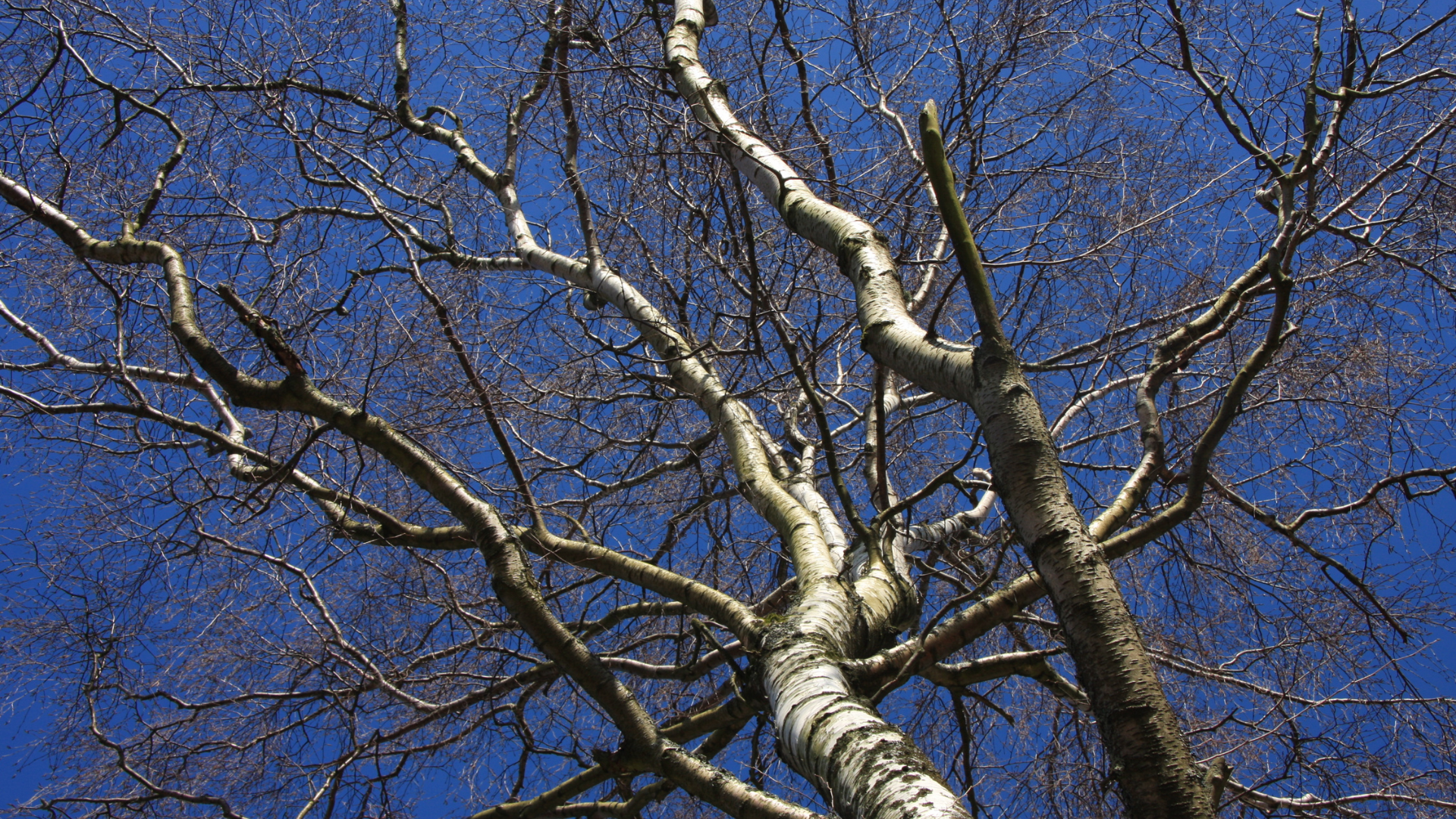
Birch and water-loving maples — shallow root systems and thin bark make these trees the first to show severe drought stress in Napa's conditions. Leaf scorch, sunscald, and early dieback are common by mid-summer in drought years without consistent supplemental irrigation.
Coastal Redwoods outside foggy zones — Redwoods planted in valley floor or inland locations are under continuous stress in Napa's dry summers. They require massive water volume and show top-kill — dying from the crown downward — during dry years without dedicated irrigation programs.
Fruit and nut trees — high vulnerability from production demands
Stone fruits (peach, plum, cherry) and walnuts prioritize fruit production over water conservation — which means they'll continue allocating resources to fruit during drought stress rather than shifting to survival mode the way native trees do.
Inconsistent irrigation leads to fruit splitting, crop drop as the tree self-triage, and accelerated pest vulnerability. Established walnuts on older Napa properties have high water demands that aren't always met through ambient precipitation during drought years.
Native oaks — vulnerable to the right mistakes
Valley Oaks and Coast Live Oaks evolved for Napa's dry summers and survive drought conditions that would kill non-native species. Their vulnerability is almost entirely from human intervention rather than the drought itself:
- Summer irrigation near the trunk — the single most common cause of native oak death in Napa Valley landscapes. Summer moisture at the root crown activates Phytophthora and Armillaria — the pathogens that kill established oaks within a few seasons
- Blue Oaks specifically — the most drought-adapted native oak in the region. Brown foliage and leaf drop in August is deciduous survival behavior, not death. Many Blue Oaks are removed unnecessarily by homeowners who misread normal summer dormancy
Species vulnerability summary:
| Tree Type | Primary Summer Threat | Key Survival Intervention |
|---|---|---|
| Birch, Redwood, water-loving non-natives | Desiccation — cannot survive without supplemental water | Heavy mulch and weekly deep soaking |
| Native Valley Oak and Coast Live Oak | Human-caused root rot from summer irrigation | Do NOT water near trunk — drought tolerance is built in |
| Blue Oak | Misidentification of dormancy as death | Observe — summer browning is normal |
| Fruit trees | Pest vulnerability and crop stress | Consistent drip irrigation at the drip line |
| Japanese Maple, Camellia | Sunscald and leaf scorch | Afternoon shade and consistent mulch |
When Drought Stress Becomes a Safety Hazard
This is the transition point that makes summer drought monitoring genuinely important rather than just horticultural — when stress moves from appearance to structural integrity:
Summer branch drop — sudden limb failure Valley Oaks, Sycamores, and Eucalyptuses in Napa Valley are all documented sources of sudden branch drop — large, seemingly healthy limbs falling without warning on calm, hot afternoons. The mechanism: extreme heat causes the tree to move water rapidly through the wood. If the wood becomes even slightly dehydrated, its mechanical ability to support its own weight diminishes. The limb essentially wilts structurally until it fractures. There is typically no visible warning from the ground before the drop occurs.
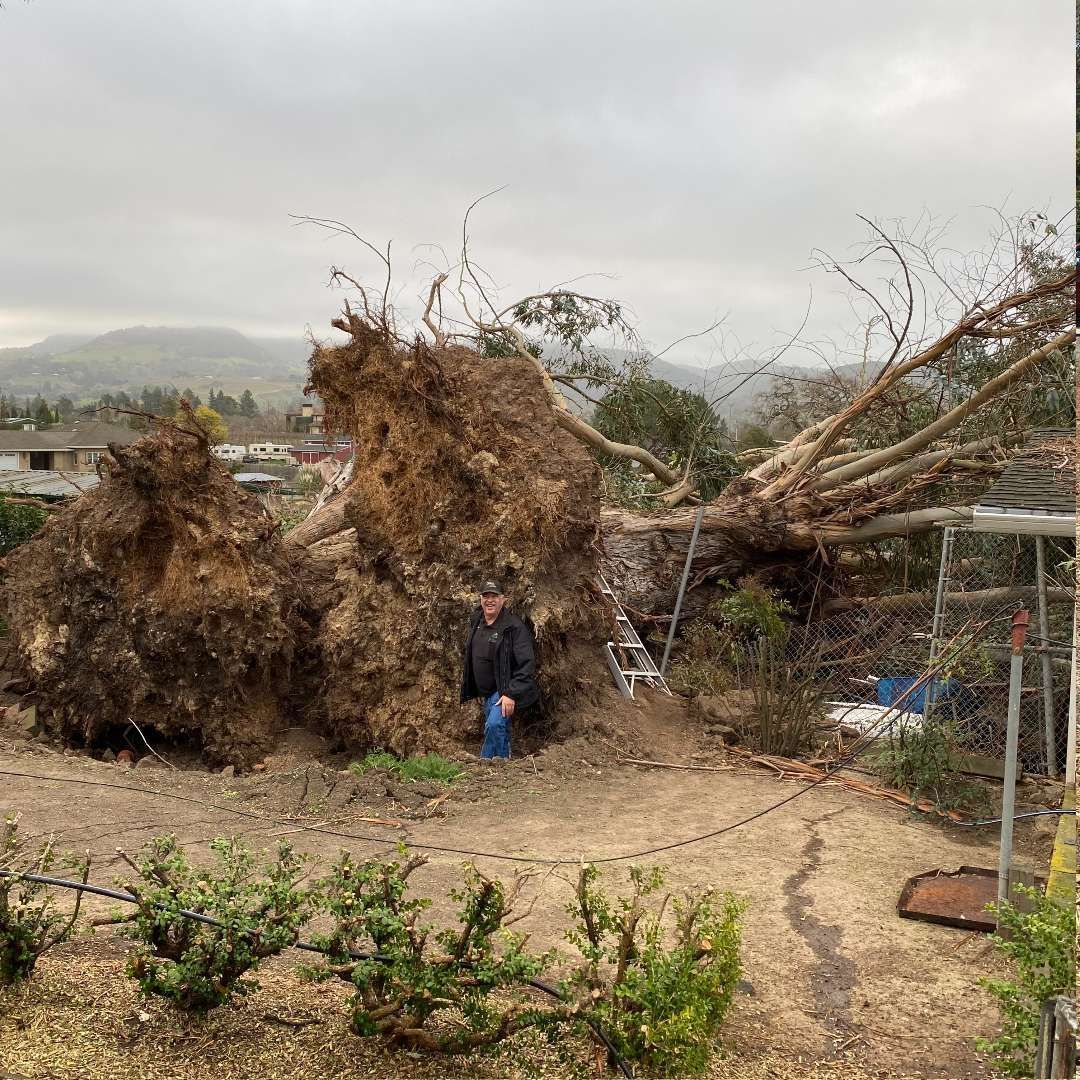
Root system shrinkage and anchor loss Drought kills fine feeder roots progressively — and Napa Valley's clay soil cracks and shrinks as it dries, creating gaps around the root ball that reduce the mechanical grip the root system has on the earth. A tree that's standing upright in September may have significantly reduced root anchorage — making it a toppling risk during the first heavy windstorm of autumn when soil rehydration expands and shifts the compromised root zone.
Structural brittleness Water gives wood its flexibility. A hydrated tree sways in wind events and distributes load effectively. A drought-stressed tree with reduced wood moisture becomes progressively more brittle — more likely to snap under load rather than flex. Napa Valley's "Diablo Wind" events in late summer and fall test every tree's structural integrity at exactly the moment drought stress is at its peak.
When removal is the right call:
- More than 50% of the canopy is dead or has experienced dieback
- Deep vertical trunk cracks or active sap oozing suggesting vascular system failure
- New lean or soil heaving at the base indicating root anchor failure
- Fungal conks growing from the trunk indicating internal decay progression
- Proximity to structures, vehicles, or high-traffic areas where failure consequences are high
The fire season connection: In Napa Valley, a dead or dying tree isn't just a falling hazard — it's standing fuel. Removing drought-killed or hazard trees is part of creating defensible space before peak fire season, not just a property aesthetic decision. Branch Boss's service area has this dynamic too — but in Napa Valley, fire proximity to structures makes it particularly consequential.
Schedule a Summer Tree Assessment With Mike's Tree Service
The trees that make it through Napa Valley's dry season intact aren't the luckiest ones — they're the ones whose owners recognized early stress signals and responded correctly, or had a certified arborist assess the property before stress became structural compromise.
The gap between "this tree looks stressed" and "this tree is a liability" can close within a single dry summer — particularly for non-native species, fruit trees under production pressure, and any tree whose root system was already compromised before the dry season began.
Mike's Tree Service provides summer drought assessment throughout Napa Valley, Yountville, St. Helena, Calistoga, and surrounding wine country. Here's what a summer assessment covers:
| Assessment Component | What It Tells You |
|---|---|
| Species-appropriate stress evaluation | Is this drought stress, normal summer behavior, or genuine decline — assessed by species rather than generic tree criteria |
| Structural risk assessment | Branch drop risk, root anchor assessment, trunk and canopy integrity |
| Oak-specific protocol | Native oak health evaluated without the summer irrigation recommendation that kills them |
| Pest and disease identification | Mediterranean Oak Borer, Hypoxylon canker, Sudden Oak Death indicators assessed before they've progressed beyond treatment options |
| Watering and mulching guidance | Species-specific recommendations for your specific property conditions — not generic advice |
| Hazard tree identification | Honest assessment of which trees represent structural or fire risk before autumn wind events test them |
| Written findings and recommendations | Clear documentation of what was found and what action timeline is appropriate |
Call Mike's Tree Service immediately for:
- Any sudden lean or soil heaving at the root base
- Fungal growth at the trunk base or on the trunk itself
- Large dead limbs over structures, vehicles, or pathways
- Any suspected Mediterranean Oak Borer activity — tiny entry holes, boring dust, upper canopy flagging
- Trees that have lost more than a third of their canopy this summer
Schedule a summer assessment for:
- Trees showing two or more of the drought stress signs covered in this guide
- Non-native species that struggled visibly last summer and have entered this season already depleted
- Any tree near a structure or in a fire-exposure area that you're uncertain about
- Native oaks that have been receiving summer irrigation — the damage may already be developing
Don't wait for the first autumn windstorm to find out what this summer's drought actually did to your trees. Contact Mike's Tree Service today.
Schedule Your Summer Tree Assessment →
Read: Signs Your Napa Valley Tree Needs Professional Pruning →
Read: Oak Tree Care in Napa Valley →