Signs Your Napa Valley Tree Needs Professional Pruning — And What Happens If You Wait
Most Napa Valley homeowners wait until a tree looks obviously unhealthy — dropping branches, dying canopy, visible decay — before calling an arborist. By that point, the intervention is almost always more expensive, more disruptive, and less effective than it would have been six months earlier. The signs that a tree needs professional pruning appear well before the obvious ones — and recognizing them early is the difference between a routine pruning visit and an emergency removal. Mike's Tree Service has cared for trees across Napa Valley, St. Helena, Calistoga, and surrounding wine country properties for years. This guide gives you the practical framework to assess your trees before a problem becomes a crisis.
Pruning vs. Trimming vs. Full Removal — How to Know Which One You Need
These three terms get used interchangeably — but they describe different work with different goals and different urgency levels:
| Pruning | Trimming | Full Removal | |
|---|---|---|---|
| Primary goal | Tree health, structural integrity, and long-term vitality | Aesthetics, shape maintenance, and clearance | Safety — when the tree is a liability that can't be corrected |
| What's removed | Dead, diseased, crossing, and structurally compromised branches | Overgrown foliage and shape-disrupting growth | The entire tree |
| Technique | Strategic, precise cuts by a certified arborist | General shaping and cleanup cuts | Controlled dismantling and removal |
| Frequency | Every 2 to 5 years for most species | Annual or semi-annual | Once — when necessary |
| Best timing | Late fall through early spring — dormant season | Spring through summer — active growth | Year-round for hazard trees; winter preferred for scheduled removals |
The practical triage question: Is the issue about the tree's health and structure — or about its appearance? Health and structure concerns need an arborist. Appearance concerns can often be handled on a maintenance schedule. When you're not sure which category you're in, assume health and structure and call for an assessment.
Visual Signs Your Napa Valley Tree Needs Professional Pruning Now
These are the signs that warrant a call to Mike's Tree Service — not a wait-and-see approach:
- Dead, brittle, or hanging branches Branches bare of leaves during the growing season, gray and peeling bark, or limbs that snap rather than bend — these are deadwood hazards. In Napa Valley's summer wind and winter storm conditions, deadwood falls without warning. This is immediate-action territory regardless of the season.
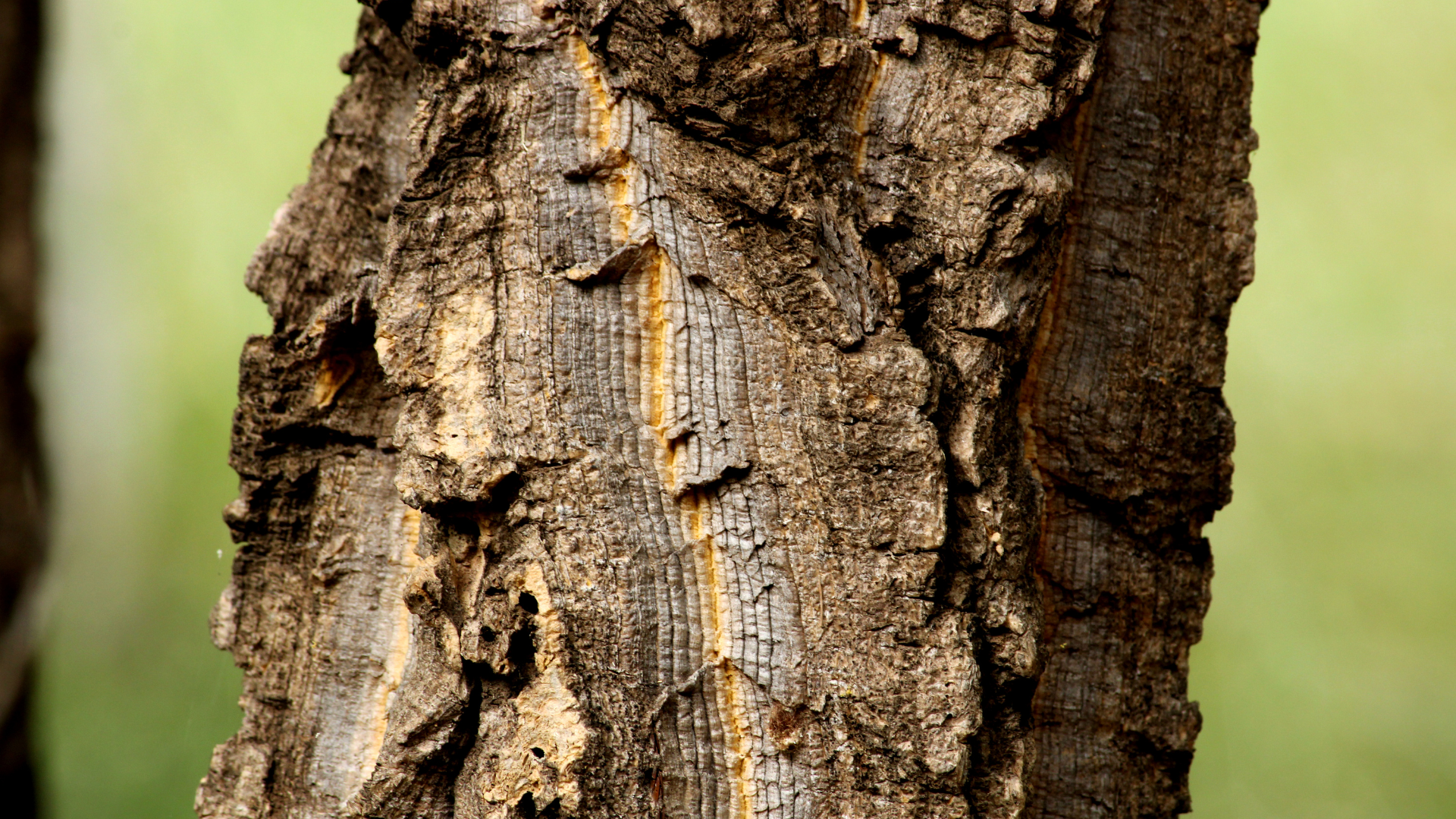
- Deep cracks or splits in the trunk Large vertical fissures in the main trunk signal severe structural weakness — particularly dangerous heading into winter rain season when saturated soil reduces root anchorage and storm winds test every structural vulnerability.
- Crossing or rubbing limbs Branches grinding against each other wear away protective bark and create open wounds — direct entry points for the fungal pathogens and boring insects that are endemic to Napa Valley's oak and ornamental tree population. Left unaddressed, crossing limbs compound their damage with every wind event.
- Low-hanging or encroaching limbs Branches touching rooflines, siding, or utility lines create structural damage risk, provide access routes for rodents, and create liability exposure. In fire-risk areas of Napa Valley, branches within striking distance of structures are also a fire hazard concern.
- Dense or severely unbalanced canopy A canopy so thick that light can't penetrate creates the humidity and poor air circulation that promote fungal growth — particularly relevant for Napa Valley's oak population susceptible to Sudden Oak Death and Mediterranean Oak Borer. An unbalanced canopy creates uneven wind loading that increases storm failure risk.
- Sucker growth and stress indicators Excessive sucker growth at the trunk base or on main limbs indicates the tree is under significant stress — allocating resources to survival response rather than normal growth. Mushrooms at the base or on the trunk indicate root or internal decay that requires professional assessment before pruning decisions are made.
Structural Signs That Require an Arborist Assessment — Not Just Pruning
Some conditions go beyond what a pruning visit can address — they require a certified arborist to evaluate structural integrity and recommend the appropriate intervention:
- Co-dominant stems with included bark Two or more equally dominant stems growing from a single attachment point create a V-shaped union with bark trapped inside rather than solid wood-to-wood connection. This is a built-in structural weak point — the union has no strong fiber holding it together. Under wind or weight load, these unions split. An arborist can assess whether cabling and bracing is appropriate or whether the co-dominant stem needs to be reduced. For a complete guide to cabling and bracing for North Texas trees — and the same principles apply to Napa Valley properties — the intervention is similar in both markets.
- Visible decay, rot, or fungal growth Mushrooms, conks, or soft areas at the base or on the trunk indicate internal decay that has progressed beyond the surface. The structural capacity remaining in the tree cannot be assessed from the outside — it requires professional evaluation. Pruning a structurally compromised tree without assessment can accelerate failure.
- Significant new lean A tree that has recently developed a lean — particularly with soil cracking or heaving on the opposite side — indicates active root system failure. This is not a pruning situation. It requires immediate arborist assessment to determine whether the tree can be stabilized or needs emergency removal.
- Cracks, seams, and trunk cavities Deep splits in the wood, elongated seams running vertically up the trunk, or open hollows in major limbs indicate imminent structural failure risk — particularly in the wet, windy conditions of Napa Valley's winter storm season. Pruning alone cannot address these conditions.
- Over-extended limbs with heavy end weight Limbs that have grown disproportionately long relative to their attachment diameter — particularly common in Napa Valley's fast-growing ornamentals — create leverage that exceeds what the attachment can withstand under storm loading. An arborist assesses the risk and recommends either weight reduction pruning or supplemental support.
Seasonal Signs Specific to Napa Valley's Climate
Napa Valley's Mediterranean climate — wet winters, completely dry summers — creates specific windows where tree stress signals are most visible and most actionable:
Late summer through early fall — post-drought stress assessment (August through October) After Napa Valley's dry season, trees that have been under water stress or competing with vineyard root systems begin showing visible decline. Watch for:
- Premature leaf drop before typical fall timing — the tree shedding foliage to reduce water demand
- Canopy thinning or dieback at branch tips — particularly in the upper crown
- Leaf scorch with brown edges while leaves remain attached — moisture deficit signal
- Poor color recovery after summer — a tree that looks stressed in September likely needs intervention before winter
This is also the best window to identify drought-weakened trees that are prime targets for Mediterranean Oak Borer infestation heading into fall. For a complete guide to summer stress identification read our summer tree care guide for Napa Valley →.
Late fall through winter — dormant season visibility (November through February) Dormancy is the best window for structural assessment — without foliage, the tree's architecture is fully visible. This is when co-dominant stems, included bark, crossing limbs, and structural imbalances are most clearly identifiable. It's also the safest pruning window for native oaks — avoiding the February through June period when beetle vectors carrying oak wilt pathogens are active.
Early spring — pre-bud break urgency (February through March) Any structural concerns identified during winter dormancy should be addressed before bud break triggers the tree's energy investment in new growth. Pruning after bud break forces the tree to redirect resources from new growth to wound response — increasing stress at the most energy-intensive point in the tree's annual cycle.
What Happens If You Wait — The Cost of Delayed Pruning in Napa Valley
Delayed pruning rarely saves money. Here's what the delay actually costs:
- Disease spreads faster than most homeowners expect Dead and dying branches are entry points for fungal pathogens and boring insects. Once Sudden Oak Death, Armillaria root fungus, or Mediterranean Oak Borer establish in a weakened tree, treatment options narrow quickly. A tree that could have been saved with timely pruning and treatment becomes a removal candidate within one to three seasons.
- Structural failure risk increases non-linearly A co-dominant stem with included bark that's manageable at 4 inches diameter becomes a serious hazard at 8 inches. The structural load increases with every year of growth — and so does the potential for catastrophic failure. What requires cabling today may require emergency removal after the next storm.
- Emergency removal costs significantly more than planned pruning The cost difference between a scheduled pruning visit and an emergency removal of a failed tree isn't incremental — it can be 3 to 5 times higher, plus any property damage the failure caused. The tree that looked "probably fine" in January becomes the emergency call in February after Napa Valley's first winter storm.
- Property damage liability accumulates In Napa Valley's wine country environment — where residential properties often sit adjacent to vineyard infrastructure, outbuildings, and neighboring properties — a failed tree creates real liability exposure. A tree assessed and managed proactively creates no liability. A tree that was observed declining and not addressed creates documented negligence risk.
- Replanting is not a short-term solution Mature trees on Napa Valley properties represent decades of growth that contribute meaningfully to property value, microclimate, and aesthetic character. A tree removed for failure that could have been preserved with earlier intervention is replaced with a sapling — not a tree.
Why DIY Pruning Often Makes the Problem Worse
This is where well-intentioned homeowners frequently create bigger problems than the ones they're trying to solve:
- Flush cuts eliminate healing capacity Cutting flush against the trunk removes the branch collar — the specialized tissue the tree uses to seal off wounds. Without the branch collar, the tree can't close the wound, and decay-causing fungi have direct access to the interior wood. This is an irreversible mistake that compounds over time.
- Topping causes structural instability and starvation Cutting main branches back to stubs triggers a survival response — the tree pushes out multiple weakly attached sprouts from the stub. These suckers grow fast, attach poorly, and become the next generation of failure risk. A topped tree is almost always more dangerous than before it was topped.
- Oak pruning during the wrong season is fatal in Napa Valley Pruning native oaks from February through June during peak beetle activity is one of the fastest ways to introduce Sudden Oak Death pathogen to a previously healthy tree. Fresh pruning wounds emit sap that actively attracts the beetles carrying the pathogen. This isn't a theoretical risk in Napa Valley — it's a documented pattern that has contributed significantly to regional oak mortality.
- Over-pruning depletes energy reserves Removing more than 20 to 25% of the canopy in a single pruning depletes the tree's energy reserves at a critical point. The tree responds by pushing weak compensatory growth — which looks like recovery but indicates severe stress. For Napa Valley's native oaks particularly, this response can open the door to secondary disease and pest pressure.
What a Professional Mike's Tree Service Pruning Assessment Covers
Here's what a Mike's Tree Service pruning assessment actually involves — because understanding the process reduces hesitation about scheduling one:
- Complete health evaluation Every assessment starts with a systematic evaluation of the tree's visible health indicators — canopy density and color, bark condition, root collar exposure, fungal growth, pest activity, and signs of disease. We're looking at the whole tree, not just the branches that prompted the call.
- Structural risk assessment We evaluate every structural vulnerability — co-dominant stems, included bark, crossing limbs, cracks, cavities, and evidence of root compromise — and provide an honest rating of the failure risk under normal conditions and under storm loading. This is the assessment that determines whether pruning, cabling, or removal is the right recommendation.
- Species-specific approach Valley Oak, Coast Live Oak, Blue Oak, California Bay Laurel, ornamental maples, stone fruit trees, and the diverse range of Napa Valley residential trees each require species-appropriate timing, technique, and follow-up. We prune oaks during the November through February safe window — no exceptions for convenience.
- Written follow-up recommendations Every assessment produces a clear written summary — what was done, what was observed, what to watch for, and when the next assessment or service is recommended. You leave the visit with a complete picture of your tree's health status, not just a completed invoice.
- Connection to larger care needs If the assessment reveals conditions beyond what pruning addresses — Sudden Oak Death indicators, MOB infestation, structural concerns requiring cabling, or decline that warrants soil and root assessment — we tell you directly and connect you to the appropriate next step.
When to Call Mike's Tree Service for Your Napa Valley Trees
The honest answer: earlier than feels necessary. The trees that require the most expensive interventions are almost always the ones that showed manageable signs for one or two seasons before the homeowner called.
Call immediately for:
- Active deadwood hanging over structures, pathways, or vehicles
- Visible trunk cracks, cavities, or fungal growth at the base
- Sudden new lean or soil cracking near the root zone
- Any suspected Sudden Oak Death symptoms — particularly bleeding cankers or rapid browning
Schedule before the season changes for:
- Dense or unbalanced canopies heading into winter storm season
- Crossing or rubbing limbs identified during a property walk
- Co-dominant stems on trees near structures
- Post-summer drought stress visible in late August through October
Annual dormant season window: November through February is the optimal scheduling window for most Napa Valley trees — lowest disease transmission risk for oaks, best structural visibility, and lowest demand on the arborist schedule. Mike's Tree Service recommends booking dormant season pruning in October before the window fills.
For trees showing summer drought stress indicators, read our summer tree care guide →. For trees showing disease or pest indicators, read our oak tree care guide →. If you're unsure whether what you're seeing warrants a call — call anyway. A 20-minute assessment costs far less than the alternative.
Schedule Your Tree Pruning Assessment →
Read: Oak Tree Care in Napa Valley →