Identifying Pests in Napa Valley Trees
Most tree damage in Napa Valley gets blamed on drought, heat, or fire. What often goes undiagnosed is the layer of pest activity happening underneath that story. Summer in Napa Valley is not just dry and hot. It is the season when several of the most destructive tree pests in the region become most active, most mobile, and most difficult to stop once they have gained a foothold.
The trees being lost to tree pests in Napa Valley CA right now are not, for the most part, trees that were healthy last month. They are trees that entered summer already stressed from drought, from root competition, from poor irrigation decisions, and from the cumulative pressure of years in a climate that demands more from trees than most property owners realize. Stress is the threshold that separates a tree that fights off an infestation and a tree that doesn't. This guide covers the pests currently active in Napa Valley, what they look like on your trees, what conditions give them the upper hand, and what a property owner can realistically do about each one
Why Summer Is Peak Season for Tree Pest Activity in Napa Valley
The timing is not coincidental. Several factors converge in Napa Valley's summer months to create optimal conditions for pest establishment and spread.
Drought stress removes a tree's primary defense. Healthy trees fight off bark beetle and borer attacks through a process called resinosis: they flood the entry tunnel with sap, physically expelling the attacking insect or drowning the eggs before they can hatch. A tree with adequate water pressure can sustain this defense. A tree running low on soil moisture cannot produce the resin volume required, and the beetle or borer that would have been expelled in a wet year gains a foothold in a dry one.
Summer also concentrates pest pressure on the trees that are already weakest. Native bark beetles and ambrosia beetles, the groups that include some of Napa Valley's most destructive species, preferentially target stressed hosts. They detect stress through chemical signals that drought-weakened trees emit differently than healthy ones. In a dry summer following a below-average wet season, the population of vulnerable trees expands significantly, and beetle populations respond accordingly.
Finally, summer is when most of these pests are actively flying and seeking new hosts. Adult beetles and borers disperse, locate stressed trees, establish galleries, lay eggs, and begin the cycle that will damage or kill the host over the following months. By the time symptoms appear in the canopy, the infestation has often been progressing in the bark or wood for weeks to months.
Mediterranean Oak Borer: The Invasive Pest That Started in Napa County
The Mediterranean Oak Borer (Xyleborus monographus) is an invasive ambrosia beetle native to Europe, the Middle East, and North Africa. The first confirmed North American infestation was detected in Calistoga, Napa County, in late 2019, according to UC Agriculture and Natural Resources. Since then it has spread to Lake, Sonoma, Sacramento, El Dorado, Mendocino, Yolo, and Marin counties. Napa County is where this pest entered California, and it remains one of the most heavily impacted areas.
The Mediterranean Oak Borer primarily attacks valley oak (Quercus lobata) and blue oak (Quercus douglasii), the two most common native white oak species across Napa Valley properties. It tends to prefer trees already stressed by drought, injury, or age, which means the valley oaks most vulnerable to summer water stress are also the ones most at risk of MOB attack.
What to look for: The beetle is tiny, roughly 3mm long (about the size of a peppercorn), and light brown with a distinctive pattern of bumps on the tip of the abdomen. You will not find the beetle itself without expert help. What property owners can observe are the signs it leaves behind:
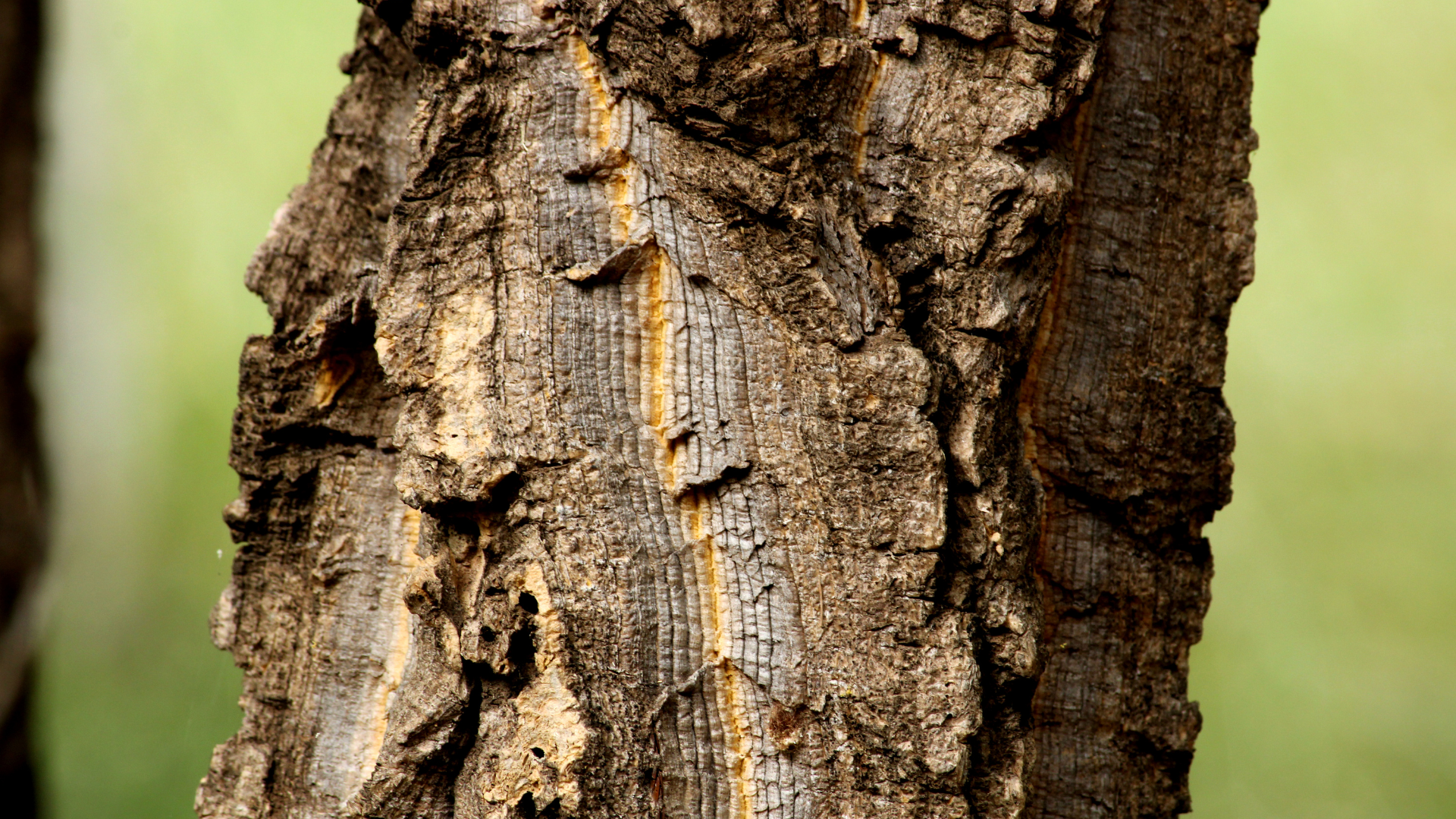
Small round entry and exit holes in the bark, approximately 1/16 inch in diameter, often concentrated on the trunk and larger branches. Boring dust (fine sawdust-like material) in the furrows and cracks of the bark beneath those holes. Sap flux, a wet oozing at entry points, on some affected trees. Branch death and canopy thinning that begins at the top third of the tree and progresses downward over time. Discolored, stained wood if a branch is broken and the interior is examined.
The critical fact about MOB: There is currently no proven chemical treatment that stops an active MOB infestation in a live tree. According to UC ANR, research into management options is ongoing. The practical response for confirmed infestations is focused on containing spread: prompt removal of heavily infested trees, proper disposal of infested wood (no transport offsite, immediate chipping or burning), and maintaining the health of uninfected trees through appropriate irrigation and care to reduce their stress and vulnerability.
Native Bark Beetles: Opportunists That Summer Drought Empowers
California has over 200 native bark beetle species. Most are not destructive under normal conditions. They play a natural role breaking down dead and dying wood. What transforms them into a genuine threat to living trees is a combination of factors that Napa Valley's dry summers reliably produce: drought-stressed hosts and populations that grow during mild winters.
According to UC IPM, native bark beetles typically attack trees already stressed by drought, disease, or mechanical damage. The key visible signs are:
Pitch tubes on the trunk and larger branches, small globs of resin at the entry points where the tree has attempted to repel the attack. White or cream-colored pitch tubes indicate the tree is fighting back successfully. Reddish-brown or darkened pitch tubes indicate the tree's defenses have failed and the beetle has gained entry. Boring dust at entry points and in the bark furrows. Tiny circular holes across the bark surface, often described as a buckshot pattern, where adult beetles have emerged. Crown decline, typically beginning in the upper canopy and progressing over weeks to months as the beetle's galleries disrupt nutrient and water transport through the inner bark.
Unlike MOB, which requires specialist confirmation, property owners who observe multiple reddish pitch tubes combined with boring dust and early canopy decline should treat this as an active infestation signal and contact a certified arborist promptly. Infested trees cannot be saved once the trunk is heavily colonized, but prompt removal and disposal prevents the emerging adult population from spreading to adjacent trees.
The prevention that matters most: Bark beetles are management problems before they are treatment problems. Trees maintained in good health through appropriate irrigation and root zone care are substantially more resistant to successful attack. Drought irrigation decisions made in June directly affect a tree's bark beetle resistance through the rest of summer.
Oak Ambrosia Beetles: The Stress Indicator That Confirms a Bigger Problem
Oak ambrosia beetles are a related group of bark-boring insects that attack stressed oaks in Napa Valley. Like the Mediterranean Oak Borer (itself an ambrosia beetle), they bore into the wood to establish galleries where they cultivate fungal colonies as a food source. The fungus they introduce often causes the staining and discoloration visible when infested wood is examined.
According to UC IPM, ambrosia beetles in Northern California typically have two generations per year. Most first-generation adults emerge and fly in approximately March. The second generation emerges around September. Because beetles develop at different rates, adults can be actively seeking stressed hosts from approximately March through October, which encompasses Napa Valley's entire dry season.
The key identification sign that separates ambrosia beetle damage from bark beetle damage is the presence of small tubes of compacted boring material extruding from the entry holes, called "frass tubes," in some species. More commonly, the entry holes are accompanied by the same boring dust and sap flux patterns as other boring beetles, but the damage to wood is deeper, creating the gallery systems visible in cross-sections of infested branches.
The practical guidance from UC IPM for avoiding inappropriate irrigation is particularly relevant here: California buckeye, tanoak, and native true oaks are adapted to summer drought. Summer irrigation near the root crown of these species can create the conditions that stress the root system and increase the tree's vulnerability to ambrosia beetle attack.
Scale Insects: The Slow Drain on Ornamental and Fruit Trees
Scale insects are among the most widely present tree pests in Napa Valley and among the most commonly overlooked. They are small, sedentary, and often mistaken for bark irregularities by property owners who have not been trained to identify them.
Scale insects feed by inserting a stylet (a feeding tube) through the bark into the phloem layer, the tissue that transports sugars from leaves downward through the tree. A moderate scale infestation on a healthy tree produces limited visible impact. The same infestation on a tree already stressed by summer drought or root competition can suppress the tree's vigor significantly, making it more vulnerable to secondary pest attack and slowing its recovery from any other stressor.
What to look for: Hard, crusty bumps on bark surfaces, branches, or the undersides of leaves, ranging from pinhead-sized to roughly the size of a pencil eraser. On oaks, the irregular texture of the bark makes early detection difficult without close examination. On ornamental trees and fruit trees, scale often appears more obviously on smooth younger bark and on the undersides of leaves. A sticky coating (honeydew secreted by the scale insects) on leaves or on surfaces beneath the tree, sometimes accompanied by sooty mold, a black fungal growth that develops on the honeydew deposits.
Summer is when scale insect populations peak, and it is when the crawler stage, the mobile juvenile phase when these insects are most vulnerable to treatment, is active. Properly timed horticultural oil or insecticidal soap applications during the crawler stage are significantly more effective than treatments applied at any other time of year. Timing depends on species and local conditions, which is why a certified arborist's assessment of which scale species are present is the prerequisite for effective treatment.
What Summer Pest Management Actually Looks Like for Napa Valley Property Owners
Managing tree pests in Napa Valley in summer is not primarily about pesticide applications. It is about maintaining the conditions that keep trees resistant to attack in the first place, identifying problems early enough that options still exist, and making the right decisions about trees that are past the point of treatment.
The June and July inspection window matters. Most pest damage that becomes visible in September and October began in June and July. Adult beetles are flying and establishing galleries, scale crawlers are active, and the early signs of MOB activity, boring dust, small entry holes, early canopy flagging, are visible if someone is looking for them. A professional inspection in this window gives property owners the most information and the most options.
Irrigation decisions affect pest resistance directly. For non-native ornamentals and fruit trees, adequate summer irrigation supports the sap pressure that makes bark beetle attack more difficult. For native oaks, the opposite rule applies: summer water near the root crown activates the pathogens and root stress conditions that make those trees more susceptible, not less. Species-specific irrigation is not optional in Napa Valley. It is pest management.
Infested wood requires careful disposal. Bark beetles, Mediterranean Oak Borer, and ambrosia beetles can continue developing in cut wood after a tree is removed. Moving infested wood offsite spreads the pest to new areas. Infested material should be chipped on site or burned where permitted. This is one of the most important steps in preventing MOB spread, which entered Napa County through infested imported wood in the first place.
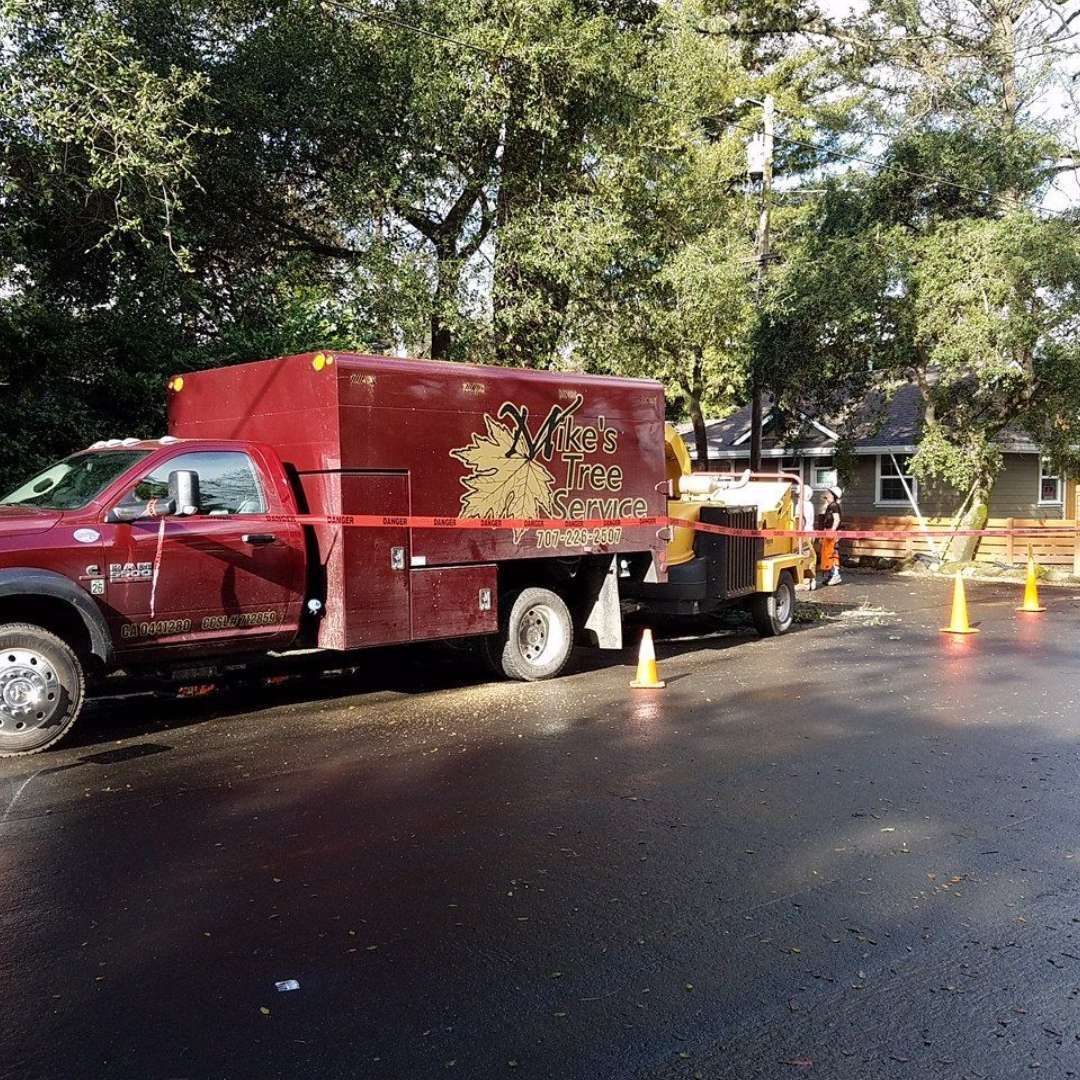
Certified arborist assessment is the right starting point. Distinguishing between MOB entry holes, native bark beetle damage, ambrosia beetle galleries, and unrelated bark irregularities requires training and experience. The wrong identification leads to the wrong response. Mike's Tree Service provides ISA-certified arborist assessments throughout Napa Valley, with specific expertise in the pest pressures that are active and spreading in this region right now.