Why Healthy-Looking Trees Can Suddenly Drop Large Branches After a Dry Napa Summer
For estimated planning context, tree trimming can range from a few hundred dollars for smaller jobs to more than $1,000 for extensive work. This broad average range can vary significantly based on tree size, location, access, complexity, proximity to structures or power lines, and whether specialized climbing or equipment is required.
At Mike's Tree Service, we price the actual project after looking at the tree, the work being requested, the surrounding property, and the safest way to complete it. Two trees of similar height can require very different amounts of labor when one is in an open yard and the other is over a roof, pool, vineyard, driveway, or utility area.
| Scope | Estimated 2026 market context | How to interpret it |
|---|---|---|
| Targeted brush clearing | Site-specific estimate recommended | Area, vegetation density, access, and debris handling determine the scope |
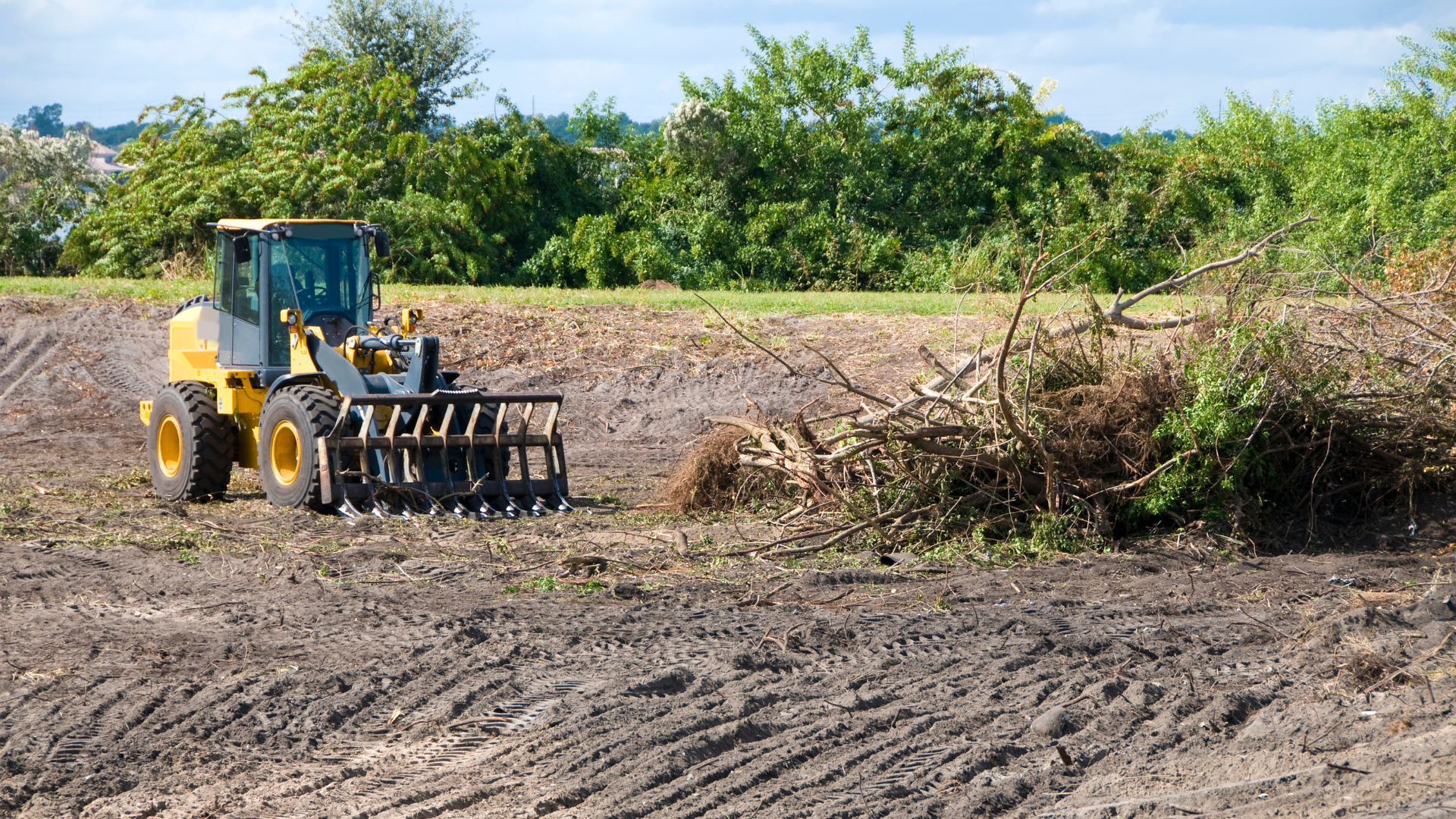
| Professional land clearing | $1,396 to $6,170 per acre | Broad national planning range reported in Angi's 2026 land-clearing cost guide, not Mike's Tree Service pricing |
| Mike's Tree Service property estimate | Free estimate | Final pricing depends on the inspected scope |
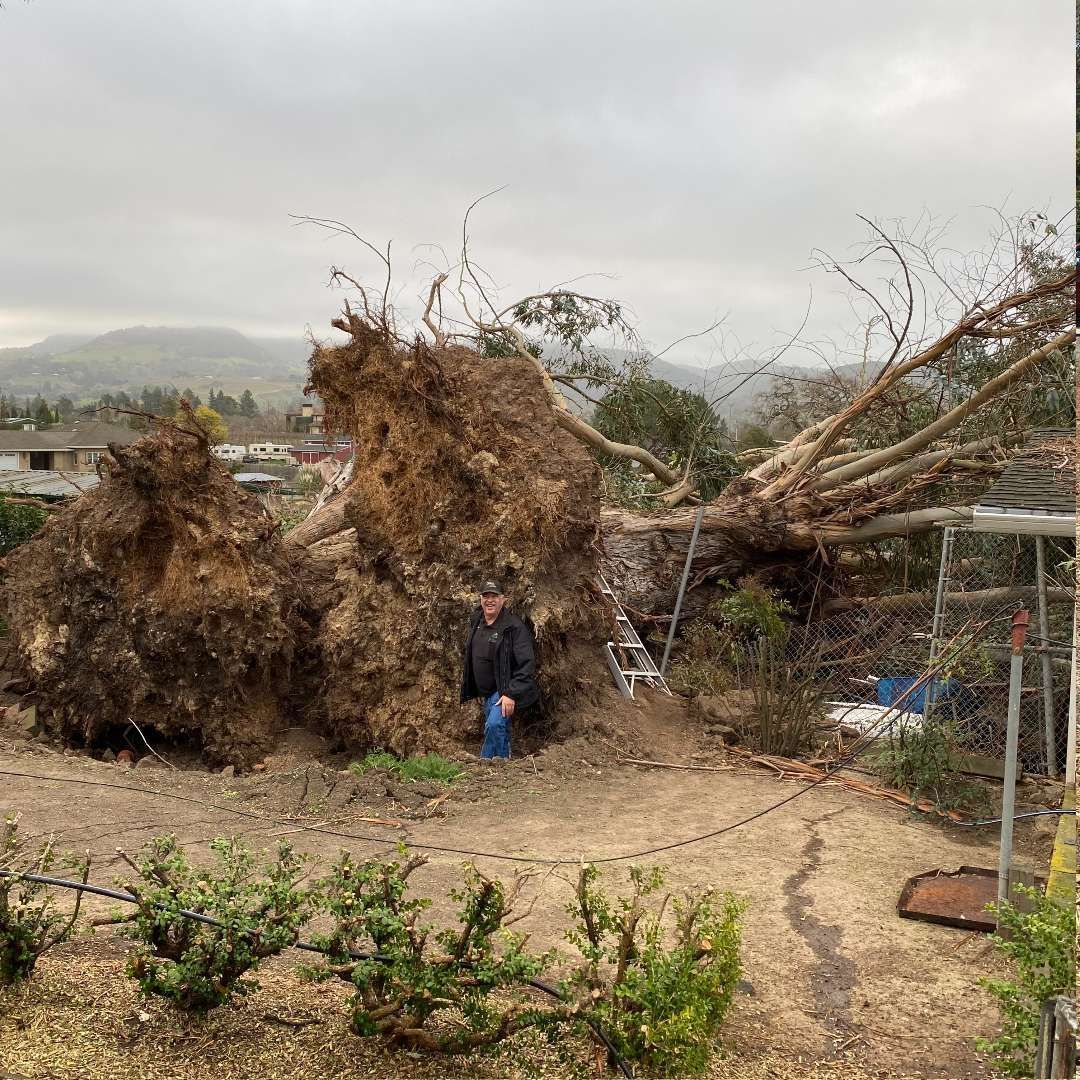
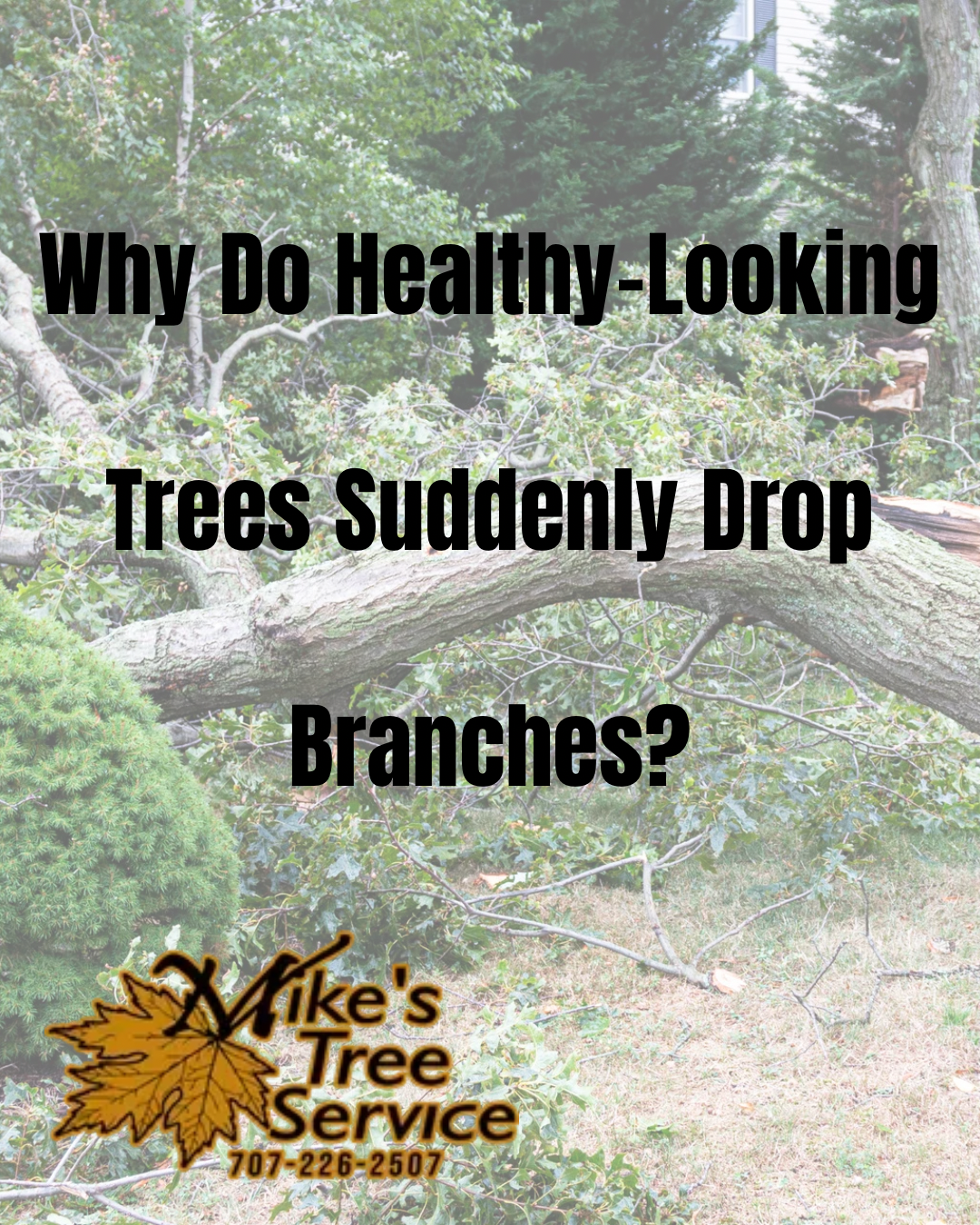
A large green limb on the ground can be unsettling when the tree above it still looks healthy. Napa homeowners often ask why are tree branches falling if the canopy is full and the weather was calm. Leaves show that a branch was alive, but they cannot reveal every weak attachment, old wound, or defect concealed inside the wood. The first priority is to keep people clear of the remaining canopy and find out whether another limb is damaged.
A branch failure does not automatically mean the whole tree must come down. The break may be isolated, or it may expose a problem that affects other parts of the tree. A useful assessment looks at the fracture, remaining structure, root zone, and places a future limb could strike. This guide explains what may cause the failure, what you can check safely, and how to choose a proportionate next step.
Why a Green Tree Can Drop a Large Branch
Sudden branch drop can occur during hot weather without the strong wind people usually associate with tree damage. UC Cooperative Extension's discussion of summer branch drop in oaks describes large, often horizontal limbs breaking on calm days, sometimes well away from the trunk. Some failed limbs show wounds or decay, while others appear sound. Mature oaks deserve particular attention because of the size of their branches, although similar failures can occur in other species.
A dry Napa summer may contribute to stress, but drought alone does not prove why a particular branch broke. UC Cooperative Extension says there is no generally accepted explanation that accounts for every summer branch drop. The phenomenon has been observed in irrigated and unirrigated landscapes, so a green canopy or an irrigation schedule cannot settle the question. The better response to
tree branches falling for no reason is to document what happened and examine the remaining tree, not to assign a cause from the weather alone.
Other Weaknesses That May Be Hidden From View
An old pruning wound can leave a point where decay develops inside a limb even while foliage continues to grow. A weak union between competing stems, a split beneath bark, or a cavity may also reduce the wood supporting a heavy branch. Long limbs with dense growth at their ends carry more leverage than shorter, balanced limbs. These conditions do not all call for the same treatment, which is why the location and shape of the break matter.
The site around the tree belongs in the investigation too. Trenching, paving, grading, heavy traffic over roots, or a change in drainage can affect the root zone without immediately changing the canopy. UC IPM explains that both water deficit and excessive soil moisture can harm trees and other landscape plants; saturated soil can damage roots. Those factors may inform an assessment, but neither dry soil nor early leaf loss proves the cause of a limb failure. Our guide to early leaf loss in Napa trees explains how canopy symptoms can have several explanations.
Warning Signs Worth Checking From the Ground
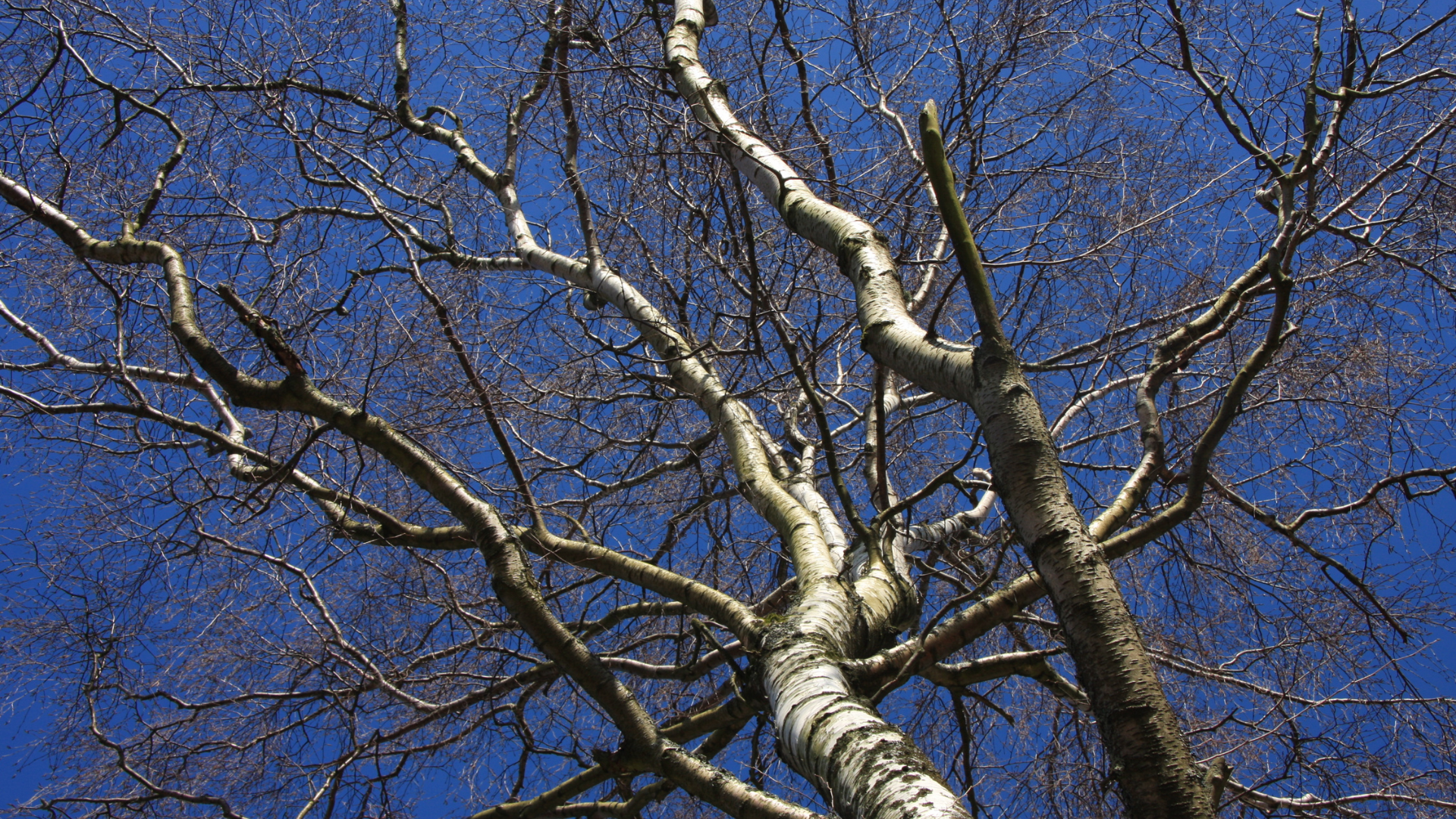
Look at the tree from outside the reach of any questionable branch. A fresh crack, hanging limb, newly exposed wood, or branch that droops differently deserves prompt attention. Dead tips, sparse foliage on one major limb, fungal growth, and a visible cavity are also worth documenting, though none provides a complete diagnosis by itself. A large limb can still fail without an obvious warning sign, so the absence of these clues is not a guarantee of safety.
Take a wide photo that shows the tree and nearby structures, then use zoom for details instead of standing beneath the canopy. Note the date, recent weather, irrigation changes, and any nearby digging; older photos may show whether a lean or droop is new. Do not climb, pull on a cracked branch, cut a loaded limb, or work near energized lines. The International Society of Arboriculture's tree risk guidance considers both a defect and what a falling branch could hit, which is why the same condition may require different urgency on different properties.
Arrange a closer assessment when you notice:
- A fresh split or hanging limb, especially above a used area
- A long, heavy branch with a changed angle or new sag
- An old wound or cavity near the attachment of a major limb
- More than one large branch failure from the same tree
- Recent root-zone work followed by canopy or stability changes
- Falling limbs above a house, parking area, walkway, or gathering space
What the Break and the Surroundings Can Tell You
The position of the fracture helps direct an inspection. A break through the middle of a long limb raises different questions from a split where two stems join, and a dead branch raises different questions from a green one. The contractor should compare the broken wood with the remaining canopy instead of treating every visible crack as evidence of the same problem. In Yountville and St. Helena, as in Napa, the species, past pruning, access, and actual use beneath the tree matter more than the city name.
Where the branch landed matters just as much as where it broke. A limb above an unused field presents different exposure from one above a patio, tasting area, driveway, or building entrance. You can move chairs, vehicles, or activities away from a suspect tree while arranging a professional evaluation. Do not use the table as a diagnosis; use it to record observations and explain why you called. Our article on the importance of regular tree inspections covers how a broader review can reveal issues that a quick ground check misses.
| What you observe | Possible concern | What should be checked |
|---|---|---|
| Green limb broke on a calm, hot day | Summer branch drop or another hidden weakness | Fracture, remaining long limbs, and targets below |
| Split at a branch union | Weak attachment or developing crack | Union structure and connected stems |
| Cavity or old pruning wound | Possible internal decay | Extent of sound wood and nearby attachments |
| Changed lean after excavation | Possible root damage or instability | Root zone, soil movement, and trunk position |
| Repeated large limb failures | More than one structural concern | Whole canopy and whether risk can be reduced |
What to Do Immediately After a Large Limb Falls
Check for injuries first and call emergency services when someone is hurt. Keep people and pets away from both the fallen limb and the tree above it, because another branch may be cracked or suspended out of sight. If the limb touches a utility line, stay back and contact the utility provider. Do not move a branch resting on a roof, vehicle, fence, or another limb; its weight can shift suddenly when it is cut or pulled.
Once the area is secure, take dated photos from a safe location and note what the limb struck. A branch lodged overhead, a fresh split above an occupied space, blocked essential access, or damage to a structure calls for urgent professional attention. Mike's Tree Service offers emergency tree service in Napa for dangerous limbs and fallen trees. A limb lying in an open, unused area may allow a scheduled assessment if no hazard remains overhead, but cleanup alone should not be mistaken for evaluating the tree.
What a Tree Assessment Should Include
The inspection should identify where the limb broke, whether the wood shows decay or an old injury, and whether similar branches remain. It should examine branch attachments, trunk condition, deadwood, root-zone disturbance, and the areas people regularly use below the canopy. Irrigation history and recent construction can add context without proving a single cause. At Mike's Tree Service, we look at the tree and surrounding property before recommending tree trimming in Napa, further evaluation, or removal.
Ask the professional to show photographs of hard-to-see findings and explain which problems require immediate work. A written proposal should distinguish hazard removal from optional maintenance and specify which branches, debris handling, and access needs are included. If structural support is suggested, ask which weakness it addresses and how the tree would be inspected afterward.
No treatment can promise that a tree will never shed another limb, so a sound recommendation should also explain remaining uncertainty and follow-up.
A Decision Framework: Monitor, Prune, Support, or Remove
Start with the condition and the exposure below it. If an assessment finds no active defect and the area beneath the tree is seldom used, monitoring with documented follow-up may be reasonable. A damaged or overextended limb may instead call for selective pruning or weight reduction, while a suitable weak union may warrant professional support and later inspection. Moving vehicles or outdoor furniture can also reduce the chance that a branch will strike a target. These are distinct options, not steps that every tree must go through.
Removal deserves consideration when extensive decay, repeated serious failures, or an unacceptable risk cannot be managed with focused work.
One fallen green limb does not automatically require whole-tree removal. ISA's tree risk guidance includes moving targets, pruning, support, routine care, and removal among possible strategies. Ask what smaller measures could retain the tree and why they would or would not address the observed defect. Our guide to removing a dead tree before fall storms addresses a different condition and should not be applied automatically to a living tree.
| Finding | Sensible next step | Why |
|---|---|---|
| No active defect and low exposure after assessment | Document and monitor | Avoids unnecessary work while watching for change |
| One damaged or overextended limb | Discuss targeted pruning | Addresses a localized condition while retaining the tree |
| Suitable weak union | Discuss professional support and follow-up | May reduce risk but cannot guarantee against failure |
| Multiple severe defects or unmanageable exposure | Evaluate broader work or removal | Focused treatment may not reduce risk enough |
| Hanging limb above people or a structure | Restrict access and request urgent help | An active hazard takes priority |
What Sudden Branch Drop Work May Cost
The size of the limb is only one part of the price. A fallen branch in an open yard is different from one suspended over a roof, trapped among other limbs, or positioned on a steep property with limited access. Crew time, rigging, nearby utilities, cleanup, and urgency can change the scope. Ask for a written estimate that names the work, whether debris hauling is included, and whether the rest of the tree needs separate attention.
Mike's Tree Service offers free estimates, but it does not publish a fixed price for every limb or tree situation. A proposal for one large branch should not be compared directly with a quote that includes structural pruning throughout the canopy. In Calistoga or Napa, an on-site evaluation establishes the safe method and the actual company price. National cost guides can help with planning, but they do not replace that inspection or serve as a guaranteed local quote.
Estimated 2026 Market Context
HomeGuide's 2026 branch-removal guide lists
$75 to $250 for a small or medium branch and
$150 to $850 for a large limb. Its separate guides put general tree trimming at $400 to $900 per tree and complete tree removal at $400 to $1,200 on average. These national ranges describe different scopes and should not be added together. They are market references,
not Mike's Tree Service prices; site access, condition, and the inspected work determine the estimate.
| Type of work | 2026 national market range | What the range generally reflects |
|---|---|---|
| Small or medium branch removal | $75 to $250 | Limited branch work; access changes the quote |
| Large limb removal | $150 to $850 | Cutting and handling a substantial limb |
| General tree trimming | $400 to $900 per tree | Broader pruning rather than one branch |
| Complete tree removal | $400 to $1,200 on average | Whole-tree work that varies with size and site |
Frequently Asked Questions
Can a healthy-looking oak drop a limb on a calm day?
Yes. Summer branch drop can occur on hot, calm days, and green leaves do not reveal every structural problem. Keep people away from the affected canopy until it has been assessed.
Does a dry summer prove that drought caused the break?
No. Water stress may contribute, but the cause of a specific failure cannot be established from weather alone. An assessment should also look at the fracture, old wounds, limb weight, roots, and site history.
Is a tree automatically unsafe after one large branch falls?
Not automatically, but a major failure warrants a closer look at remaining limbs and what they could hit. Restrict access beneath the tree until the immediate hazard is understood.
Does the whole tree need to be removed?
A single fallen limb does not make removal the default. Monitoring, pruning, or another focused measure may be appropriate if the remaining structure and exposure support it.
When should I request emergency tree service?
Call promptly for a hanging or cracked limb over people, a branch on a structure, or blocked essential access. Stay clear of any utility line involvement and contact the utility provider.
Can I cut up the fallen branch myself?
Do not cut a large limb resting on a roof, fence, vehicle, or other branches, since it may be under tension. Photograph it safely and let a qualified crew evaluate the load and remaining canopy.
Choose the Next Safe Step for Your Napa Tree
A green canopy should not be ignored after a large limb falls, but the response should fit what an assessment finds. Keep people clear, document the break from a safe distance, and check for hanging wood or damage to structures without walking beneath the tree. If the hazard is active, request urgent help; otherwise, schedule an evaluation before returning to normal use below suspect branches. The transition from September into October offers a practical time to review summer failures before wetter, windier weather changes the conditions.
Mike's Tree Service has served Napa since 1968 and provides licensed and insured tree work for residential and commercial properties. We can explain whether the findings support monitoring, focused pruning, or tree removal, with a free estimate for the proposed work. Homeowners and property managers in Yountville, St. Helena, and Calistoga can take the same first step: protect the area and have the actual tree condition assessed. Contact Mike's Tree Service to describe what fell and arrange the next visit.