6 Reasons to Remove a Dead Tree Before Napa Valley’s First Major Fall Storm
For estimated planning context, tree trimming can range from a few hundred dollars for smaller jobs to more than $1,000 for extensive work. This broad average range can vary significantly based on tree size, location, access, complexity, proximity to structures or power lines, and whether specialized climbing or equipment is required.
At Mike's Tree Service, we price the actual project after looking at the tree, the work being requested, the surrounding property, and the safest way to complete it. Two trees of similar height can require very different amounts of labor when one is in an open yard and the other is over a roof, pool, vineyard, driveway, or utility area.
A dead tree can stand quietly through summer and still become a serious problem once fall weather changes. Dry wood, weakened roots, internal decay, and brittle limbs may remain in place on calm days but respond very differently to wind and wet soil. For Napa homeowners, dead tree removal is often less about appearance and more about removing a known hazard before weather adds another layer of stress.
At Mike’s Tree Service, we inspect the tree, its structure, what is around it, and whether pruning or monitoring is still reasonable. When a tree is fully dead and positioned where failure could damage a home, driveway, fence, vineyard, or utility area, waiting for the first major fall storm usually does not improve the situation. Healthy trees are evaluated differently because removal is not our default recommendation.
September Is the Planning Window Before Napa’s Wetter Season
The current National Weather Service forecast for Napa remains mostly dry through mid-September, with warm afternoons and only light to moderate winds expected in the near term. National Weather Service Napa forecast That is useful because it gives property owners time to inspect known problem trees before stronger fall systems begin arriving later in the season.
A dead tree does not need rain to become unstable, but storm conditions can raise the consequences of existing defects. Wind increases loading on trunks and branches, while wetter soil can reduce support around compromised roots. Mike’s Tree Service provides tree removal in Napa Valley for planned removals and urgent storm-related situations.
6 Reasons to Remove a Dead Tree Before the First Major Fall Storm
1. Dead Wood Becomes More Brittle Over Time
Living wood can flex under load, while dead wood gradually loses resilience and becomes more brittle as decay progresses. A limb that stayed in place through summer can still break once wind loading increases, and even smaller dead branches can damage roofs, vehicles, walkways, or outdoor areas. If the entire canopy is dead, several weak points may be developing at the same time.
2. Root Systems Can Keep Deteriorating After the Tree Dies
A dead tree does not stop changing below ground because roots can decay and lose strength, especially when disease or fungal activity is involved. Much of that deterioration is hidden, so a tree can appear unchanged while support below the soil continues to weaken. UC Cooperative Extension notes that high wind, heavy rain, and saturated soil can contribute to tree failure, making visible root damage, soil movement, or a changing lean important warning signs. UC Cooperative Extension tree hazard guidance
3. A Dead Tree Can Drop Limbs Before the Whole Tree Fails
Tree failure does not always mean the entire trunk falls because dead trees can begin shedding individual limbs first. Those branches can fail with little warning once the wood becomes brittle, especially over roofs, pools, driveways, fences, or frequently used areas. Mike’s Tree Service evaluates both the whole tree and the targets beneath it before recommending removal.
4. Fall Wind Can Turn an Existing Weakness Into a Failure
Wind does not create every tree defect, but it can reveal cracks, cavities, weak branch attachments, damaged roots, and previous storm injury. That matters on exposed Napa properties, hillside sites, vineyard edges, and homes with trees above structures or access roads. A planned tree removal before storm season gives the crew more control over rigging, access, and debris handling than an emergency removal after failure.
5. Dead Trees Can Create Secondary Property Problems
A dead tree is not only a falling-risk issue because bark, limbs, and trunk sections can continue dropping as decay advances. Cavities and deteriorating wood may also support insects or fungal activity, while the remaining stump can become a separate landscape problem. Mike’s Tree Service can handle removal, cleanup, and stump grinding when the area needs to be restored afterward.
6. Emergency Removal Is Usually More Complicated Than Planned Removal
A standing dead tree can often be assessed, rigged, and dismantled under controlled conditions. After a storm, the same tree may be leaning, resting on a structure, blocking access, or partially uprooted, which can make the work more complex. Mike’s Tree Service provides 24/7 emergency tree removal, but preventive removal gives more control over equipment placement, rigging, and site protection when the hazard is already known.
How to Tell Whether a Dead Tree Is a High-Priority Hazard
A dead tree in the middle of a natural area is different from a dead tree beside a bedroom, driveway, tasting room, or power line. Risk depends on both the condition of the tree and what could be hit if part of it fails. That is why hazardous tree removal decisions should consider location as much as tree health.
| Warning Sign | Why It Raises Concern |
|---|---|
| Dead canopy throughout | Indicates the tree is no longer recovering |
| Large dead limbs over structures | Creates direct falling-object risk |
| New or expanding trunk cracks | May indicate structural separation |
| Cavities or major decay | Can reduce load-bearing wood |
| Mushrooms or decay at the base | May point to root or lower-trunk decay |
| Soil lifting or cracking near roots | Can indicate root-plate movement |
| Lean has recently increased | Suggests changing stability |
| Tree is within striking distance of a target | Raises the consequence of failure |
If several of these signs appear together, the tree deserves a professional assessment rather than continued observation from the ground. No one can reliably predict the exact day a tree will fail. The goal is to recognize when its condition and location create enough risk that removal becomes the responsible choice.
Use This 10-Minute Dead Tree Check From the Ground
You can gather useful information without touching the tree or climbing into the canopy. Walk around the tree from a safe distance and look at the trunk, major limbs, root zone, and what surrounds it. Take photos from several angles so changes can be compared if the tree has been monitored over time.
Look for These Changes
Check whether bark is falling away, large branches are already dead, cracks are widening, cavities are visible, or fungal growth is appearing near the base. Also look for soil lifting on one side of the tree, a recent increase in lean, or branches that have already started dropping. If the tree is close to a house, road, driveway, vineyard, fence, or utility line, include those targets in your photos.
Do not strike the trunk, cut roots, or climb the tree to test it yourself. Dead wood can break unpredictably, and serious internal decay may not be visible from the ground. Mike’s Tree Service provides professional assessments and tree removal in Napa when the condition warrants it.
What a Dead-Tree Removal Assessment Should Cover
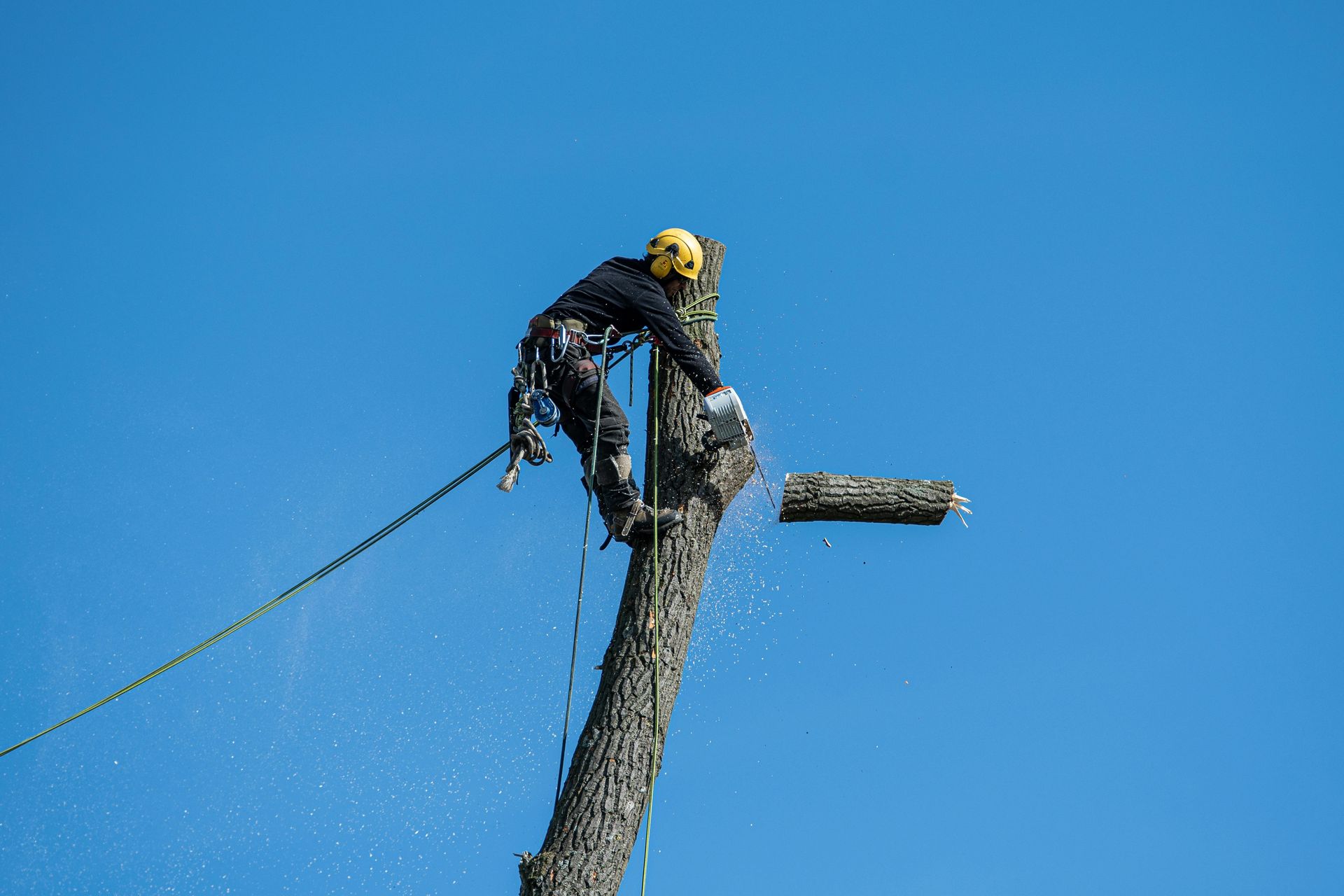
A proper removal assessment should look beyond tree height and trunk diameter. Mike’s Tree Service evaluates the tree’s lean, decay, branch structure, root-zone condition, access, nearby targets, and the space available for equipment or rigging. Those details determine whether sections can be lowered normally or whether a more controlled dismantling plan is needed.
Access and Rigging
A dead tree in an open field is very different from one above a roof, pool, driveway, vineyard row, or narrow side yard. Limited access can change what equipment can reach the tree and how each section must be controlled. Planning those details before cutting begins is what turns a hazardous removal into a managed operation.
Cleanup and What Happens After Removal
The assessment should also clarify what happens to logs, branches, and the remaining stump. Some properties only need the standing hazard removed, while others need complete hauling and stump grinding so the area can be reused. A written estimate should make that scope clear before the work starts.
When Pruning Is Not Enough
Tree trimming can reduce risk when a living tree has isolated dead branches but the trunk, roots, and overall structure remain sound. That is different from a fully dead tree, where pruning cannot restore root function, trunk strength, or living tissue. Once the entire tree is dead, removing a few branches only reduces part of the hazard.
Mike’s Tree Service follows a preserve-when-practical approach with living trees, but a dead tree in a high-use area has very little long-term management value. Monitoring can still be reasonable in some natural settings where there is no meaningful target nearby. Around homes, roads, commercial properties, and vineyard operations, the tolerance for a known dead-tree hazard is much lower.
What Does Dead Tree Removal Cost in Napa?
For
Estimated Planning Context, Mike’s current tree-service guidance notes that California tree removal commonly falls around
$300 to $2,000 per tree, while Napa removals can range from a few hundred dollars to more than $1,000 for larger jobs. These are broad average planning figures, not fixed Mike’s Tree Service pricing. Dead trees can sometimes cost more than comparable live trees because brittle wood and instability may require more controlled rigging and safety measures.
| Cost Factor | Why It Changes the Removal |
|---|---|
| Tree height and diameter | Larger sections require more labor and equipment |
| Dead or brittle condition | Can require slower, more controlled dismantling |
| Proximity to structures | Limits drop zones and increases rigging |
| Power lines or utilities | Adds planning and clearance requirements |
| Hillside or vineyard access | Can limit equipment placement |
| Crane or specialized equipment | May be needed for complex removals |
| Debris hauling | Changes cleanup scope |
| Stump grinding | Adds a separate post-removal service |
This broad average range can vary significantly based on tree size, location, access, complexity, proximity to structures or power lines, and whether specialized climbing or equipment is required. Mike’s Tree Service provides free on-site estimates so the price reflects the actual tree and property. Stump grinding, debris hauling, and other cleanup can be included when needed.
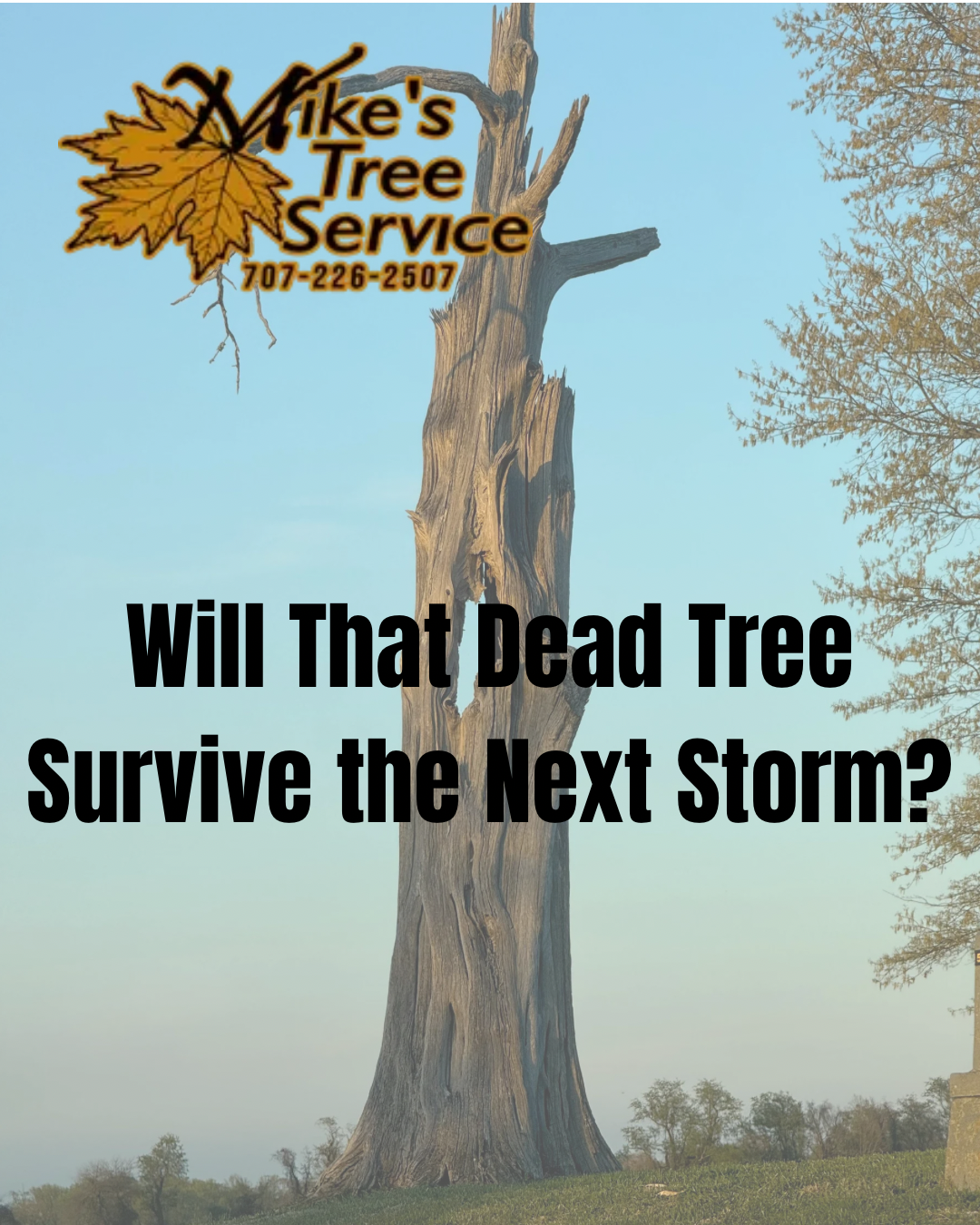
Dead Tree Removal Across Napa Valley
Napa is the primary service area for this article, but the same storm-preparation issues apply throughout the valley. Mike’s Tree Service regularly works in Yountville, St. Helena, and American Canyon, where property layouts range from compact residential lots to estates, vineyards, commercial sites, and hillside properties. A dead tree near a tasting room in Yountville presents a different access problem than a dead oak near a slope in St. Helena or a tree between homes in American Canyon.
The removal plan changes with the site, but the assessment principles stay the same. We look at tree condition, failure points, access, nearby structures, utilities, and how sections can be lowered safely. Homeowners searching for
dead tree removal near me should expect an on-site assessment when the tree is large, unstable, or close to something valuable.
Frequently Asked Questions
How dangerous is a dead tree before a storm?
A dead tree can become more hazardous because roots, branches, and trunk wood continue weakening after the tree dies. Wind can increase loading on brittle branches, while wet soil can reduce support around compromised roots. The risk is highest when the tree is close enough to strike people, structures, vehicles, roads, or utilities.
Should I remove a dead tree before the first major fall rain?
If the tree is fully dead and located where failure could cause damage, removal before the wetter season is often the safer choice. Waiting for saturated soil or stronger winds does not improve the tree’s structure. A professional assessment can confirm whether the tree should be removed now or whether short-term monitoring is reasonable.
Can a dead tree be made safe by trimming it?
Sometimes dead branches can be removed from a living tree while the rest of the tree remains healthy. A completely dead tree is different because trimming cannot restore the trunk, roots, or overall structure. If the whole tree is dead and it has a meaningful target nearby, removal is usually the more complete risk-reduction option.
How much does dead tree removal cost in Napa?
Mike’s current guidance places broad California tree removal averages around $300 to $2,000 per tree, with Napa jobs ranging from a few hundred dollars to more than $1,000 for larger removals. Dead trees may require additional rigging or safety measures because the wood can be brittle and unpredictable. Mike’s Tree Service provides a free on-site estimate based on the actual tree, access, and surrounding property.
Does Mike’s Tree Service remove dead trees in Yountville, St. Helena, and American Canyon?
Yes. Mike’s Tree Service provides professional tree removal throughout Napa and surrounding Napa Valley communities including Yountville, St. Helena, and American Canyon. The team handles residential, commercial, vineyard, hillside, and emergency removals using the equipment and rigging appropriate for each site.
Remove the Known Hazard Before Weather Makes the Decision
A dead tree does not become safer because it made it through another dry summer. Its roots and wood can continue deteriorating even when nothing obvious changes from week to week, and the first stronger fall wind or rain event can expose weaknesses that were already there. For a tree within striking distance of a home, driveway, business, vineyard operation, or utility area, that is a risk worth evaluating before storm conditions arrive.
Mike’s Tree Service has provided professional tree care in Napa since 1968 and offers free estimates for planned and emergency removals. If a tree is dead but still standing, September gives you a useful window to assess it while current conditions remain relatively calm. The safest dead tree removal plan is usually the one made before the tree becomes a storm cleanup.
Tree Removal in Napa
Tree Removal in Napa Valley
Stump Grinding
Tree Removal Costs in Napa Valley
Mike’s Tree Service FAQ
Contact Mike’s Tree Service