Brush Clearing vs Land Clearing: Which Does Your Napa Valley Property Need Before Fall?
For estimated planning context, tree trimming can range from a few hundred dollars for smaller jobs to more than $1,000 for extensive work. This broad average range can vary significantly based on tree size, location, access, complexity, proximity to structures or power lines, and whether specialized climbing or equipment is required.
At Mike's Tree Service, we price the actual project after looking at the tree, the work being requested, the surrounding property, and the safest way to complete it. Two trees of similar height can require very different amounts of labor when one is in an open yard and the other is over a roof, pool, vineyard, driveway, or utility area.
Overgrown vegetation can make two projects look similar from the driveway even when they require very different plans. One property may need selective brush removal around mature trees. Another may need trees, stumps, undergrowth, and debris removed so the land can support construction or a new use. Understanding brush clearing vs land clearing helps Napa property owners choose the right scope without paying for work the site does not need.
The decision should begin with the property's goal, not the size of the equipment. Access, slope, vegetation density, drainage, retained trees, and the intended use all matter. A focused plan can improve visibility and movement while preserving valuable vegetation. A broader plan can prepare an entire area for its next purpose.
Why the Late-Season Transition Is a Useful Clearing Checkpoint
As September gives way to October, dry weeds, fallen limbs, dense undergrowth, and blocked access routes are often easier to see. This makes the seasonal transition a practical time to walk the property, document problem areas, and decide what should be addressed before wetter conditions complicate access or expose drainage issues.
That does not make fall a universal deadline. The right schedule depends on soil conditions, weather, project size, permitting needs, and whether heavy equipment will be required. A small brush-removal project may be straightforward, while extensive property clearing on a slope can require more planning to protect retained vegetation and limit erosion.
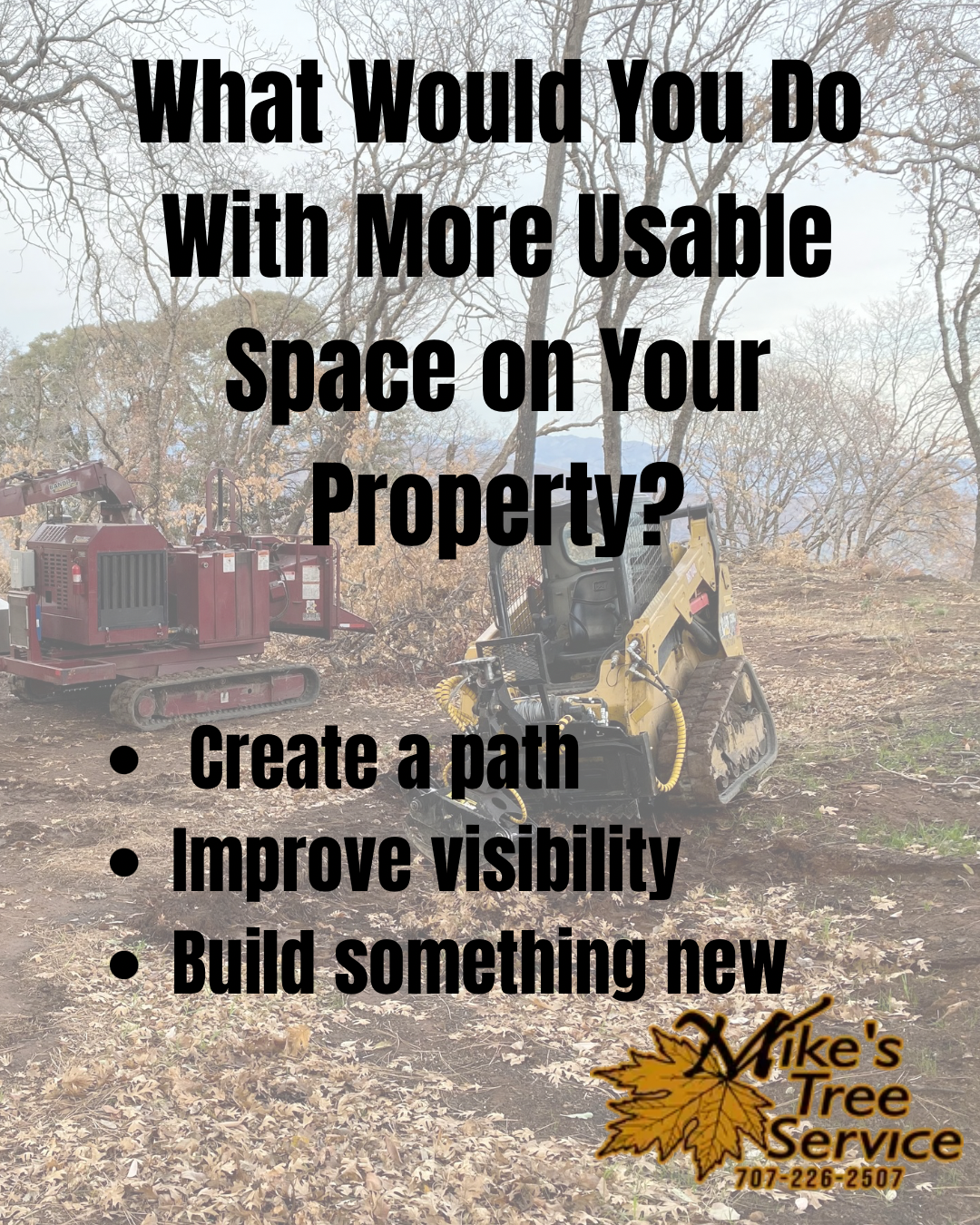
Start by identifying the result you want. If the goal is to reopen a path, reduce dense undergrowth, or improve visibility around existing trees, selective clearing may be enough. If the goal is to prepare a building pad, open a heavily wooded lot, remove stumps, or change how the land will be used, a larger land-clearing scope may make more sense.
Brush Clearing vs Land Clearing: What Is the Difference?
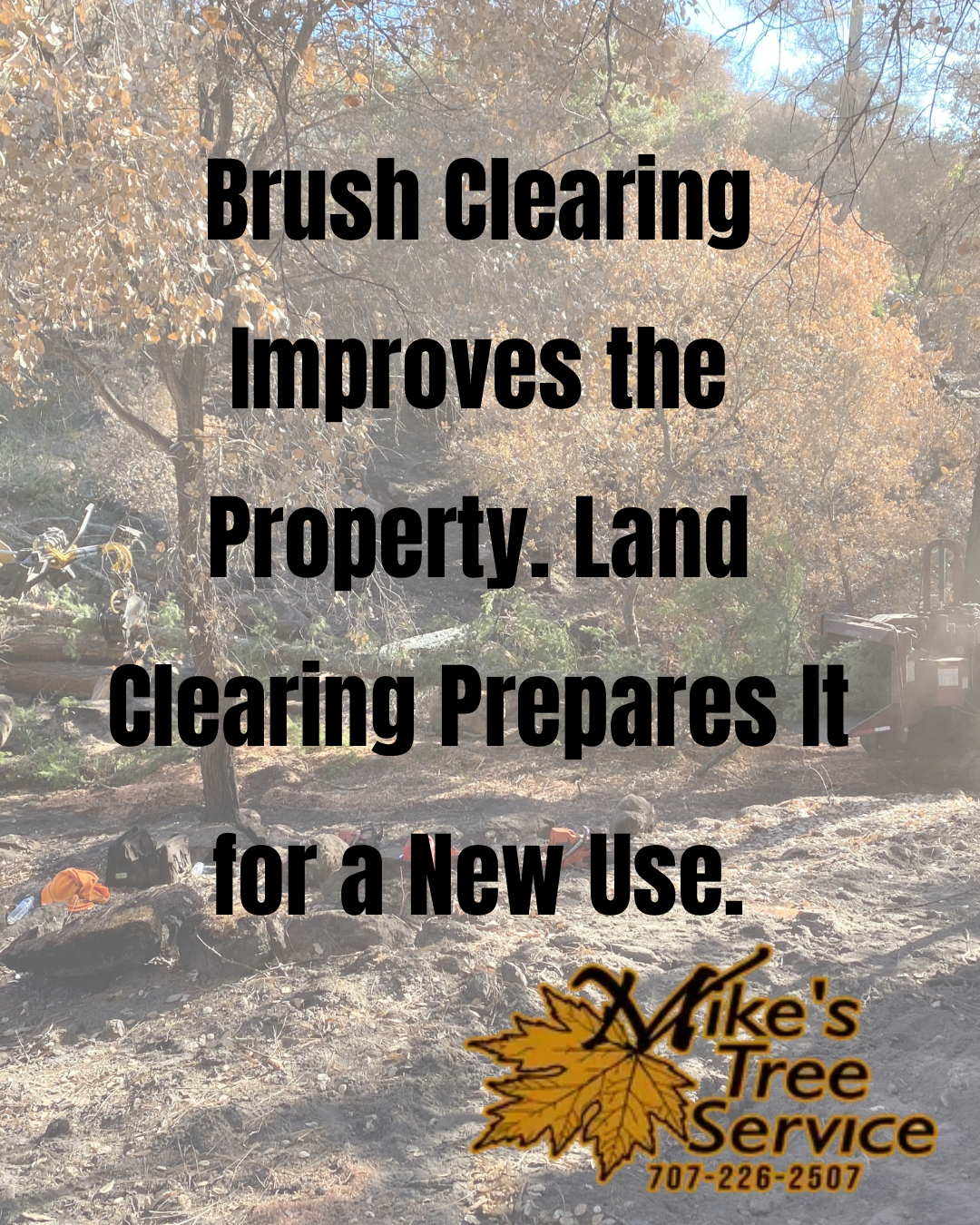
Brush clearing is selective. It typically targets weeds, vines, brambles, shrubs, saplings, dead vegetation, and surface debris while leaving established trees and much of the site's existing structure in place. Brush removal can make land easier to walk, inspect, maintain, or use without turning the project into full site preparation.
Land clearing is broader. It may include brush removal along with tree removal, stump grinding, undergrowth removal, and debris cleanup. Depending on the approved scope, it can prepare an area for construction, agriculture, landscape changes, improved access, or another substantial use. It does not automatically mean removing every tree or stripping the site to bare soil.
| Decision point | Brush clearing | Land clearing |
|---|---|---|
| Primary goal | Control overgrowth and restore access or visibility | Prepare a larger area for a new or substantially changed use |
| Typical material removed | Weeds, vines, shrubs, brambles, saplings, dead vegetation, and loose debris | Brush plus selected trees, stumps, undergrowth, and larger obstacles |
| Mature trees and stumps | Usually retained unless separately included | May be removed when they conflict with the project plan |
| Ground disturbance | Often more limited | Can be greater because of equipment, stump work, and site preparation |
| Common uses | Paths, fence lines, view corridors, access, and ongoing vegetation control | Building areas, driveways, vineyard or agricultural space, and major lot changes |
| Ongoing maintenance | Regrowth commonly requires periodic follow-up | Future maintenance depends on the final use and stabilization plan |
| Best next step | Mark what should stay and define the treatment area | Confirm boundaries, access, utilities, approvals, and the intended finished condition |
The key distinction is scope.
Vegetation management preserves and improves what is already there. Full clearing changes more of the site so it can serve a different purpose.
When Brush Clearing Is Usually Enough
Brush clearing is often the practical choice when the property's basic layout already works. The mature trees can remain, no building pad is needed, and the main problem is dense or unmanaged growth. A Napa homeowner may want to reopen a walking path, reveal a fence line, make a neglected side yard usable, or create better access for inspection and maintenance.
This focused approach also fits many properties where healthy trees contribute shade, privacy, appearance, or slope stability. Selective work can remove competing brush and accumulated debris while keeping the valuable parts of the landscape. On an estate near Yountville, for example, the goal may be to clear encroaching vegetation from service access without altering the surrounding tree canopy or vineyard edge.
Brush clearing is not necessarily a one-time solution. Roots, seeds, and surrounding vegetation remain, so regrowth should be expected. The long-term plan may include periodic cutting, pruning, debris removal, or other maintenance appropriate to the site. That recurring care is often more sensible than escalating a limited vegetation problem into unnecessary
lot clearing.
When Full Land Clearing Makes More Sense
Full land clearing becomes more appropriate when vegetation is only one part of the obstacle. Trees, stumps, buried roots, accumulated debris, tight equipment access, or a major change in land use can turn a brush-removal job into site preparation. The finished condition should be defined before work begins so the crew knows what must be removed, what must remain, and how the area will be accessed.
Common signs that a broader scope may be needed include:
- A planned home, addition, outbuilding, driveway, or utility route occupies the area.
- Trees or stumps conflict with the intended use, not just the view.
- Dense vegetation prevents a reliable assessment of the ground and site boundaries.
- The project involves a large rural parcel rather than an isolated patch of brush.
- Old fencing, fallen material, or other debris must be removed with the vegetation.
- The owner is reclaiming acreage for vineyard, agricultural, or landscape use.
- Safe equipment access and debris handling require a coordinated clearing plan.
A heavily overgrown Calistoga parcel, for instance, may need brush, selected trees, stumps, and debris addressed together before the usable area can be restored. Even then, the plan should distinguish necessary removal from vegetation worth retaining. Mike's Tree Service describes its approach as using modern equipment while preserving healthy vegetation where possible and minimizing unnecessary disturbance.
Match the Clearing Scope to the Property Goal
The clearest proposals start with an intended outcome. “Clear the property” can mean anything from cutting back a narrow access lane to preparing several acres for development. Agreeing on the goal helps prevent gaps between what the owner expects and what the crew is asked to deliver.
Improve Access and Manage Overgrowth
If the objective is to reach a gate, inspect a fence, walk between structures, or recover a usable portion of the yard, selective brush clearing may solve the problem. Marking the desired path width and identifying plants or trees to retain gives the work a clear boundary. It also makes future maintenance easier because the owner can see exactly which corridor should stay open.
This scope is particularly useful where overgrowth is uneven. A property may have one dense edge near a drainage route while the rest remains manageable. Treating the affected zone can be more efficient and less disruptive than clearing the entire parcel.
Prepare for Construction or a New Use
Construction and major land-use changes require a different conversation. The clearing boundary should correspond with approved plans, access needs, staging areas, utility locations, and any trees designated for protection. Tree and stump removal may be necessary, but grading, excavation, and finished drainage should not be assumed to be part of the same proposal unless they are expressly included.
For vineyard, agricultural, or estate projects around St. Helena, early coordination matters because slopes, access roads, retained trees, and erosion-control requirements can shape the work. A site visit allows the clearing contractor to see conditions that aerial images or property descriptions may miss.
Reduce Vegetation Near Structures
When the goal is to manage vegetation around a home or outbuilding, the answer is not automatically whole-site clearing. Dead growth, dense shrubs, low limbs, accumulated debris, and vegetation continuity may need attention while established trees remain part of the landscape. The treatment should reflect the structure, terrain, species, and surrounding conditions.
This is where the phrase
vegetation management is more useful than “remove everything.” The plan can focus on separation, access, maintenance, and removal of problem material while accounting for shade, privacy, soil protection, and the health of retained trees.
Soil, Slope, Drainage, and Retained Vegetation Matter
What is above ground is only part of the clearing decision. Soil moisture, slope, drainage patterns, root systems, and equipment routes affect how a project should be completed. Removing substantial vegetation can change how water moves across a site and how exposed soil responds to rain. On a hillside property near St. Helena, retaining appropriate vegetation and planning debris movement may be as important as deciding what to cut.
Before work begins, identify drainage swales, stream areas, septic components, wells, utilities, fences, irrigation, vineyard infrastructure, and trees that must remain. Access should be wide and stable enough for the proposed equipment. If those conditions are unclear, a smaller exploratory scope or additional site review may be appropriate before committing to broad clearing.
Local requirements also matter. Napa County's private tree removal and conservation guidance explains that conservation regulations can apply when vegetation clearing is connected with earth-disturbing activity, and that stream setbacks and certain land uses may trigger additional requirements. This does not mean every brush-clearing project needs a permit. It does mean owners should confirm applicable rules before tree removal, grading, or extensive disturbance begins.
Good
property clearing leaves the site ready for the next step, not simply emptied of vegetation. Boundaries, retained trees, debris handling, erosion considerations, and the desired final condition belong in the scope from the start.
Defensible Space Is Vegetation Management, Not Automatic Land Clearing
Defensible-space work and land clearing can overlap, but they are not interchangeable. CAL FIRE's defensible-space guidance describes a managed buffer around structures, with different priorities as distance from the building increases. The guidance emphasizes removing dead or dry material, maintaining separation, managing grass and shrubs, and accounting for factors such as slope.
That framework supports selective decisions. Near a structure, the work may focus on combustible material, plant spacing, low branches, and clear access. Farther out, periodic mowing, brush reduction, and removal of fallen debris may be appropriate. A construction site or a parcel being converted to another use may need full land clearing, but defensible-space maintenance by itself does not require every healthy tree or root system to be removed.
Property owners should evaluate the home and surrounding vegetation as a system. Dense brush in one zone, overhanging limbs in another, and debris near an access route may call for several targeted services rather than one indiscriminate treatment. CAL FIRE also advises care with equipment during hot, dry, or windy conditions, so timing and work methods should be discussed as part of the plan.
What Brush Clearing and Land Clearing Cost
Clearing costs depend on the work that can be seen and the conditions discovered during the site visit. Acreage matters, but two one-acre projects can differ significantly. Light brush on level ground with direct access is not equivalent to dense vegetation, mature trees, stumps, steep terrain, or limited space for equipment and debris handling.
Estimated 2026 Market Context
| Scope | Estimated 2026 market context | How to interpret it |
|---|---|---|
| Targeted brush clearing | Site-specific estimate recommended | Area, vegetation density, access, and debris handling determine the scope |
| Professional land clearing | $1,396 to $6,170 per acre | Broad national planning range reported in Angi's 2026 land-clearing cost guide, not Mike's Tree Service pricing |
| Mike's Tree Service property estimate | Free estimate | Final pricing depends on the inspected scope |
Use the national figure only as an early budgeting reference. Napa Valley conditions, labor, access, vegetation, disposal requirements, and the specific finish expected can move a quote outside a broad national range. Brush clearing can cost less than full land clearing when it covers a smaller area and avoids tree or stump removal, but dense brush on difficult terrain can still require substantial labor and equipment.
The quote should clarify the treatment area, trees and stumps included, equipment access, debris handling, and whether hauling, chipping, or disposal is included. It should also state what the site will look like when the work is complete. If grading, erosion controls, utility coordination, or permits are required, confirm whether they are included, handled by another contractor, or remain the owner's responsibility.
Frequently Asked Questions
Is brush clearing the same as land clearing?
No. Brush clearing usually removes weeds, shrubs, vines, saplings, dead growth, and underbrush while retaining mature trees and the site's general layout. Land clearing is a broader service that may also remove trees, stumps, and larger obstacles to prepare the property for construction, agriculture, access, or another use.
Can brush clearing help with defensible-space maintenance?
Yes, selective brush removal can be one part of defensible-space maintenance. The appropriate work depends on distance from structures, vegetation type, slope, spacing, and current conditions. Follow CAL FIRE and local guidance rather than assuming every area should receive the same treatment.
Does land clearing always remove every tree?
No. A clearing plan can identify trees to remove and trees to protect. Mike's Tree Service states that it aims to preserve healthy trees where possible. The correct balance depends on the intended use, tree condition, access, and any approved plans or local requirements.
Will I need a permit before clearing vegetation in Napa County?
Possibly. Small, selective maintenance may differ from tree removal, grading, work near streams, or clearing tied to development or agricultural conversion. Napa County's rules vary with the activity and site. Confirm requirements with the relevant county department before starting work that could involve regulated trees, earth disturbance, slopes, or protected areas.
Is fall a good time to schedule property clearing?
It can be a useful planning and service window because dry-season growth and access problems are visible, while upcoming rain makes drainage and soil protection important. The best timing still depends on weather, soil conditions, project scope, approvals, and equipment needs. A site-specific recommendation is more reliable than a calendar rule.
Does Mike's Tree Service handle residential and commercial clearing?
Yes. The company offers residential and commercial land-clearing services in Napa Valley, including brush removal, lot clearing, tree and stump removal, debris cleanup, and related site-preparation work. The exact combination should be confirmed during the estimate.
Choose the Right Clearing Scope for Your Napa Valley Property
The best answer to brush clearing vs land clearing is the narrowest scope that safely achieves the property's goal. Brush clearing fits selective overgrowth control, access improvement, and ongoing vegetation management. Land clearing fits major site changes that require trees, stumps, dense undergrowth, or debris to be addressed together.
Mike's Tree Service has served Napa Valley since 1968 and provides residential and commercial clearing with modern equipment. The company is licensed and insured and offers free estimates. A site visit can define what stays, what goes, how debris will be handled, and whether a focused brush-removal plan or complete lot clearing is appropriate for a property in Napa, Yountville, St. Helena, or Calistoga.
Contact Mike's Tree Service at 707-226-2507 or request an estimate online to discuss the property, access, intended use, and preferred finished condition.
Land Clearing Services in Napa
Land Clearing Services in Napa Valley