Can Tree Roots Damage Your Driveway or Foundation? What Napa Homeowners Should Know
For estimated planning context, tree trimming can range from a few hundred dollars for smaller jobs to more than $1,000 for extensive work. This broad average range can vary significantly based on tree size, location, access, complexity, proximity to structures or power lines, and whether specialized climbing or equipment is required.
At Mike's Tree Service, we price the actual project after looking at the tree, the work being requested, the surrounding property, and the safest way to complete it. Two trees of similar height can require very different amounts of labor when one is in an open yard and the other is over a roof, pool, vineyard, driveway, or utility area.
| Scope | Estimated 2026 market context | How to interpret it |
|---|---|---|
| Targeted brush clearing | Site-specific estimate recommended | Area, vegetation density, access, and debris handling determine the scope |
| Professional land clearing | $1,396 to $6,170 per acre | Broad national planning range reported in Angi's 2026 land-clearing cost guide, not Mike's Tree Service pricing |
| Mike's Tree Service property estimate | Free estimate | Final pricing depends on the inspected scope |
Tree roots can lift driveway slabs and disrupt paving, particularly where a growing tree has limited space beside hard surfaces. Foundation concerns require a different investigation, because a nearby tree and a cracked wall do not establish cause and effect. For homeowners researching tree roots damaging foundation areas, the useful next step is to identify the type of movement and the condition of both the tree and the property. Cutting roots or removing a mature tree before that investigation can create another problem without correcting the original one.
At Mike's Tree Service, we help Napa homeowners evaluate tree-related concerns and plan appropriate tree work. A foundation specialist, structural engineer, or pavement contractor may also be needed when the issue extends beyond the tree. This guide explains the differences, the warning signs to document, and the decisions to make before anyone digs beside the driveway or house.
Why Driveway Damage and Foundation Damage Are Different
Driveway and walkway slabs often sit close to surface roots, so root growth can create a direct conflict with the pavement above. A house foundation has a different design, depth, load, and relationship to the supporting soil. The Royal Horticultural Society's guidance on trees near buildings notes that roots are unlikely to penetrate sound footings directly and explains the potential for indirect movement on shrinkable clay soils. Those principles help frame the question, but they do not establish the soil conditions or cause of damage at an individual Napa property.
A crack beside a tree may involve settlement, drainage, moisture changes, construction details, or another condition that needs evaluation. It is also possible for more than one factor to contribute to movement over time. A tree assessment can identify species, condition, root conflicts, and the consequences of proposed tree work, while a qualified building professional evaluates structural questions.
Pavement heave and foundation distress should not be treated as interchangeable evidence.
How Roots Can Lift Concrete and Asphalt
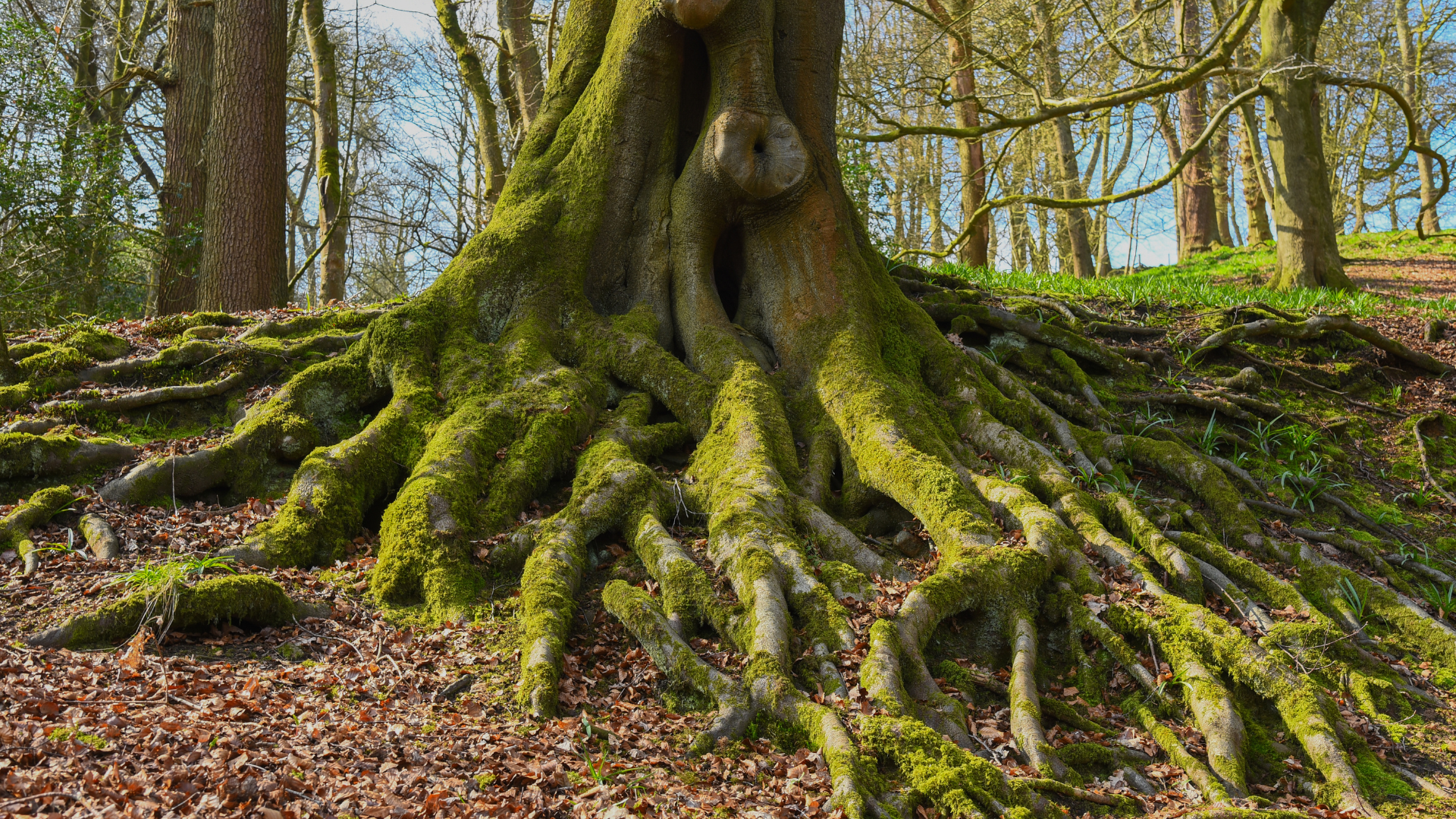
Roots grow where the soil offers conditions that support them, including access to oxygen and moisture. As woody roots increase in diameter beneath shallow paving, they can displace the material above. Restricted planting areas and pavement construction both influence whether that interaction becomes visible damage.
| Observed condition | Possible explanation | What to investigate |
|---|---|---|
| Raised slab near a mature tree | Root growth beneath pavement | Root location and pavement support |
| Cracked concrete with no visible root | Settlement, loading, roots, or another cause | Evidence beneath and around the affected area |
| Asphalt distorted along a root route | Root and pavement conflict | Extent, access, and repair options |
| Foundation cracking near a tree | Several possible structural or soil factors | Building condition and site-specific soil behavior |
| Movement after excavation | Disturbed support or damaged roots | Construction history and remaining tree stability |
A U.S. Forest Service review of tree-root conflicts with pavement identifies factors such as restricted soil volume, mature tree size, shallow soils, and pavement construction. The research supports examining the tree and hardscape together rather than treating species alone as the explanation. A large root beside a slab is relevant evidence, but it still needs to be connected to the affected area.
That distinction matters before replacing concrete. If the underlying conflict remains, a newly poured surface may face similar pressure as the root continues growing. If settlement or a failed base is responsible, cutting a nearby root will not repair the support beneath the slab.
Tree Root Damage Signs Worth Documenting
Look for patterns and changes over time rather than trying to identify the cause from one photograph. Keep observations specific: what moved, where it moved, and when you first noticed it. This information helps the appropriate professional decide what to inspect next.
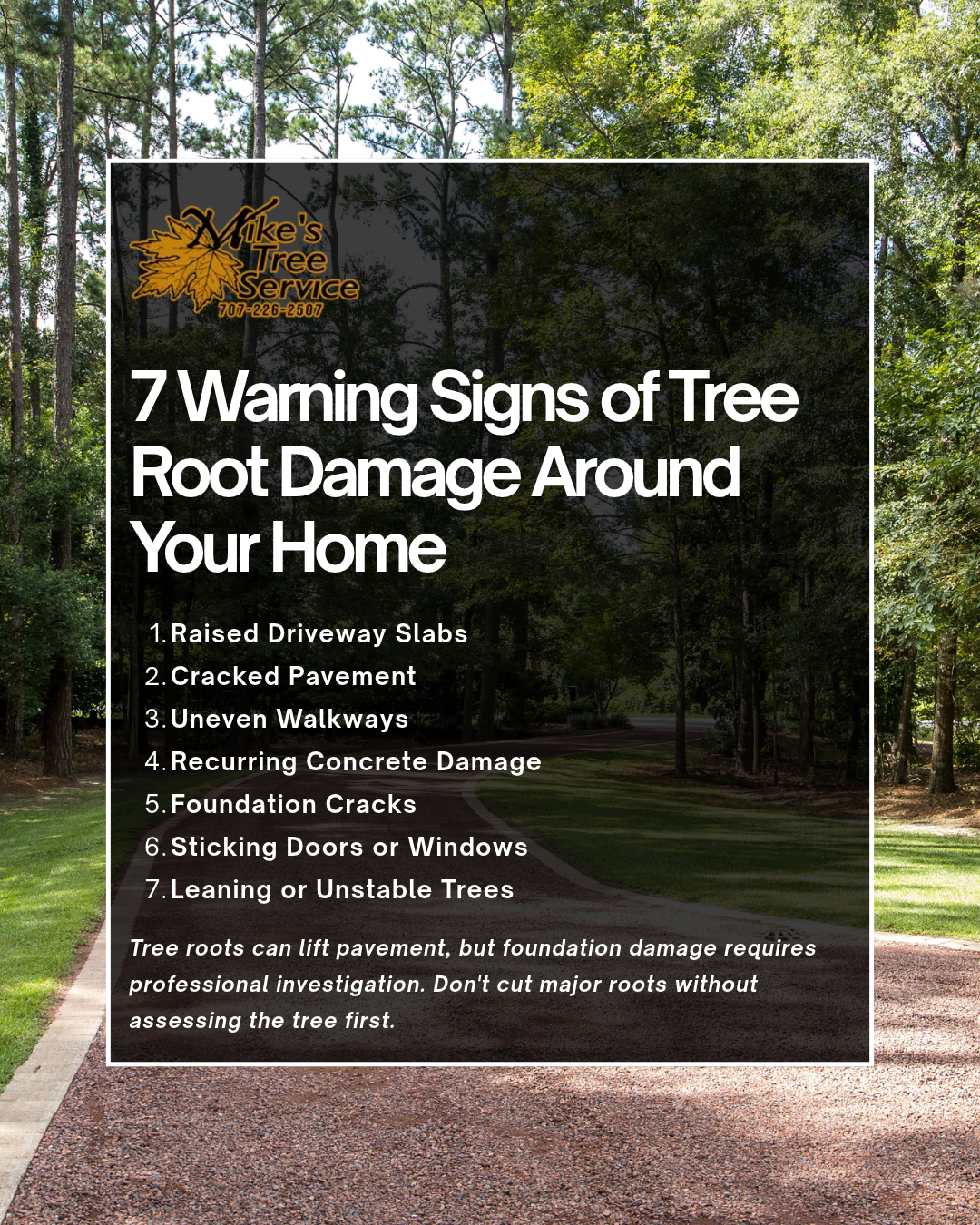
- Raised pavement edges: One slab sits noticeably higher than the adjoining surface.
- A repeating ridge: Pavement distortion follows the approximate route of a visible surface root.
- Restricted access: A gate, garage approach, or walking route becomes harder to use.
- Recurring repairs: The same section lifts or cracks after earlier work.
- Changing building symptoms: Doors, windows, or wall cracks change alongside other signs of movement.
- Recent root disturbance: Excavation, trenching, or grading occurred near the tree.
- Tree instability: A new lean, lifted soil, or exposed torn roots appears.
Foundation cracks and sticking doors are reasons to investigate, not proof that a nearby root caused damage. Record their locations and whether conditions are changing, then consult the appropriate building professional. Do not use a crack-width threshold from an online article as a diagnosis of structural safety.
Raised pavement also deserves attention before its cause is fully resolved. Mark or avoid a trip hazard and use another route where practical. Keep people away from a tree showing new movement, particularly after roots were cut or soil was disturbed.
If you also notice canopy decline, mushrooms, or a changing lean, our guide to signs of root rot in trees explains the additional warning signs that warrant a tree-health assessment. Pavement movement and declining roots can require different investigations, so describe both sets of observations when you call.
Why Cutting a Root Can Create Another Hazard
Large roots help anchor the tree as well as support its water and nutrient needs. Removing them can affect stability, health, and the tree's ability to respond to later stress. UC Integrated Pest Management's construction guidance warns that cutting or injuring large roots can increase the likelihood of windthrow, especially in wet soil. A root that seems inconvenient beside a driveway may therefore have an important supporting role.
There is no universal cutting distance or root diameter that makes every situation safe. Species, tree size, root arrangement, soil, prior damage, and the number of affected roots all matter. The assessment should consider the combined loss, including roots that were severed during earlier projects.
Do not let a pavement demolition crew cut first and ask about the tree afterward.
What Homeowners Can Do Before Any Digging
Start with documentation and communication between the people involved. Tree work, utility work, and hardscape repairs can overlap in the same narrow strip beside a house. A coordinated plan helps prevent one repair from undermining another.
- Photograph the whole area, the tree, affected paving, and visible changes from safe positions.
- Collect previous repair invoices, irrigation changes, and any available construction records.
- Note whether movement changes with seasons or follows a particular leak or excavation.
- Arrange utility locating before digging and identify private lines or systems separately.
- Confirm ownership and any applicable local requirements before work on a boundary or public tree.
- Ask the pavement contractor to flag likely root conflicts before scheduling demolition.
- Request tree evaluation before roots are cut, covered, or driven over.
Avoid digging test trenches beside major roots or applying chemicals to kill an unwanted root. Neither approach establishes whether the root caused the damage, and both can harm the tree. Do not abruptly change irrigation around a mature tree as a substitute for identifying a leak or soil issue.
If construction is already underway, stop unplanned root cutting and have the exposed conditions reviewed. Tell the tree professional how many roots were affected and where equipment has traveled.
How to Choose Between Tree Care and Property Repair
The best plan may preserve the tree while changing the pavement, or it may require removal when a serious conflict cannot be resolved safely. The choice should follow the evidence and the project's requirements. A tree service estimate should also be clear about work that belongs to another specialist.
| Situation | Appropriate evaluation | Possible direction after assessment |
|---|---|---|
| Localized pavement lift with a sound tree | Tree professional and pavement contractor | Adjust the route, surface, or construction detail |
| Roots exposed during driveway replacement | Tree professional before further disturbance | Protect roots or assess a carefully defined intervention |
| Suspected structural foundation movement | Qualified structural professional, with soil input as needed | Identify cause before prescribing tree work |
| Significant root damage and new instability | Prompt tree-risk evaluation | Restrict access and determine safe treatment |
| Unavoidable conflict with an unsuitable tree | Tree and project assessment | Consider removal and suitable replacement planting |
Possible pavement solutions may include rerouting a walkway, altering a detail, or using a different design where the site and applicable requirements allow it. None is automatically appropriate beside every tree or foundation. Avoid raising soil levels over roots or against the trunk simply to create a flatter surface.
When removal is justified, our Napa Valley tree-removal service addresses the tree work as a defined scope. Concrete replacement, foundation repair, utility work, and engineered grading should be identified separately. Removing the tree does not by itself level an existing slab or restore a damaged foundation.
What Tree Work May Cost
We provide free project estimates based on the tree, access, condition, and requested work. For independent planning context, HomeGuide's 2026 tree-removal guide lists an average range of
$400 to $1,200, while its stump-grinding guide lists
$120 to $400 for the first stump. These are national market figures; our estimate reflects the actual work required at your property.
| Work category | Independent planning figure or approach | What to confirm |
|---|---|---|
| Tree removal | $400 to $1,200 national average range | Size, rigging, access, utilities, debris |
| First stump grinding | $120 to $400 national average range | Diameter, depth, access, cleanup |
| Work around roots of a standing tree | Scope-specific assessment | Whether the intervention is appropriate and safe |
| Structural or soil investigation | Separate specialist scope | Findings, testing needs, and written recommendations |
| Pavement or foundation repair | Separate repair estimate | Cause, design, materials, and restoration |
Complex removals, tight access, large trees, or hazardous conditions can exceed a national average. A project near a building may also need coordinated scheduling so crews do not damage retained roots or newly repaired surfaces. Ask for tree removal, stump work, debris handling, and any root-related work to be itemized clearly.
Our stump-grinding service addresses the stump area, but stump grinding is not the removal of every root beneath a driveway. Existing roots and the voids that may develop as organic material decays can matter to a future hardscape project. Have the pavement contractor specify the preparation needed for the new surface rather than assuming grinding alone makes it ready to build.
A Decision Framework for Roots Near Your House
Choose the next step according to the affected structure and evidence of change. A healthy tree close to a house needs a different response from a newly unstable tree with freshly severed roots. The aim is to correct the actual conflict while avoiding unnecessary removal or unsafe root cutting.
- Document and schedule review: Roots are nearby, but there is no confirmed damage or changing condition.
- Coordinate tree and pavement assessment: A driveway or walkway is lifting and roots may be involved.
- Seek structural evaluation: Foundation or building movement is suspected, particularly when several symptoms are changing.
- Stop unplanned excavation: A contractor encounters substantial roots during repair work.
- Restrict access and request prompt tree help: A new lean, soil heaving, or major root injury suggests instability.
- Consider removal after assessment: Necessary construction and safe tree retention cannot be reconciled.
For example, a lifted walkway may allow a revised route that keeps a valuable tree. A foundation crack without evidence of root interaction needs investigation before anyone prescribes tree root removal. A tree damaged by repeated trenching may require an urgent safety decision even if the original concrete problem was small.
The same process applies in Napa, Yountville, St. Helena, and Calistoga, but conditions vary by property. Soil, slope, irrigation, building design, tree species, and earlier construction influence the recommendation.
Proximity is a reason to inspect, not a diagnosis or an automatic removal order.
Frequently Asked Questions
Can roots break through a sound house foundation?
Direct penetration of sound footings is generally unlikely, but site-specific problems still need investigation. Existing openings, soil conditions, and the type of structure affect the question. Do not assume either guaranteed damage or guaranteed protection from a general statement. Have suspected building movement evaluated by a qualified professional.
Does a root lifting the driveway need to be cut?
Not necessarily, because a pavement design change may be possible. Root cutting can affect the tree's stability and health. Assess the root and the proposed repair before selecting a treatment. The safest useful solution may involve both a tree professional and a pavement contractor.
Will removing the tree repair existing concrete damage?
No, because raised or broken paving remains after the tree is removed. The surface and its support still need an appropriate repair plan. Root decay may also affect future site preparation. Coordinate tree work with the contractor rebuilding the hardscape.
How far should a tree be from a house?
There is no single distance that suits every species, soil, and building. Consider mature size, available rooting space, utilities, pavement, and local conditions. Existing trees should be evaluated based on their actual condition and conflicts. New planting offers a chance to choose a better long-term fit for the space.
Can a root barrier solve an existing problem?
A barrier is a site-specific design option rather than a universal cure. Installing one around an established tree may itself require excavation and root disturbance. It will not flatten damaged pavement or resolve an unrelated foundation condition. Evaluate the installation and expected result before committing to it.
Is stump grinding the same as tree root removal?
No, because grinding usually treats the stump and an agreed surrounding area. Roots may remain beyond that footprint. Removing roots beside a standing tree is a different question from processing a stump after removal. Make sure the estimate defines which material will be addressed and how the area will be left.
Get a Clear Plan Before Cutting Roots
If roots appear to be lifting your driveway or you are concerned about a tree beside the house, we can discuss the tree-related part of the problem. We review the visible conditions and explain the proposed tree-work scope before you commit. When the concern involves structural movement, we recommend coordinating with the appropriate building professional. Call Mike's Tree Service at (707) 226-2507 to request a free project estimate in Napa.
We also serve homeowners in Yountville, St. Helena, Calistoga, and surrounding Napa Valley communities. Share photographs, earlier repair records, and any plans for driveway replacement or excavation when you contact us. Keep crews from cutting major roots until the tree's condition and project requirements have been reviewed. A coordinated plan helps protect your property while giving a sound tree a fair assessment.