6 Signs Your Tree May Have Root Rot Before Napa Valley’s Rainy Season
For estimated planning context, tree trimming can range from a few hundred dollars for smaller jobs to more than $1,000 for extensive work. This broad average range can vary significantly based on tree size, location, access, complexity, proximity to structures or power lines, and whether specialized climbing or equipment is required.
At Mike's Tree Service, we price the actual project after looking at the tree, the work being requested, the surrounding property, and the safest way to complete it. Two trees of similar height can require very different amounts of labor when one is in an open yard and the other is over a roof, pool, vineyard, driveway, or utility area.
| Scope | Estimated 2026 market context | How to interpret it |
|---|---|---|
| Targeted brush clearing | Site-specific estimate recommended | Area, vegetation density, access, and debris handling determine the scope |
| Professional land clearing | $1,396 to $6,170 per acre | Broad national planning range reported in Angi's 2026 land-clearing cost guide, not Mike's Tree Service pricing |
| Mike's Tree Service property estimate | Free estimate | Final pricing depends on the inspected scope |
The shift from Napa Valley’s dry season toward wetter fall conditions can reveal hidden root problems. Rain may trigger fungal fruiting bodies, soften compromised soil, and add wind load to trees with weakened roots. Knowing the signs of root rot in trees helps homeowners respond to evidence instead of one mushroom or yellow leaf. The goal is to recognize when professional assessment is reasonable or urgent, not diagnose a tree from the ground.
Root decline is difficult to identify because important changes happen below the soil. Drought, irrigation problems, compaction, wounds, insects, and seasonal leaf changes can produce similar symptoms. Homeowners in Napa, Yountville, St. Helena, and Calistoga should look for patterns across the base, roots, canopy, soil, and recent movement. If a large tree leans suddenly, moves at the root plate, or threatens a structure, keep people away and request help.
Why Root Problems Often Appear When Rain Returns
Root decay does not usually begin with the first autumn storm. A tree may enter fall with drought stress, excessive irrigation, root injury, construction disturbance, or hidden fungal activity. As soil becomes wetter, oxygen around roots can decrease and some pathogens gain favorable conditions. Rain may also expose weak anchorage when wind pushes the canopy and saturated soil offers less resistance.
UC IPM explains that some wood-decay fungi produce mushrooms around tree bases following fall and winter rains. Early fall is therefore useful for observation, but a mushroom is only one clue. A sound inspection considers species, irrigation, drainage, trunk flare, root condition, canopy response, targets, and recent changes. The table summarizes six observations worth documenting before wetter weather settles in.
| Possible sign | What a homeowner may notice | Why it deserves attention |
|---|---|---|
| Mushrooms or conks near the base | Clusters after rain or shelf-like growth on roots or trunk | Some fruiting bodies are associated with wood-decay fungi |
| Unseasonal canopy decline | Smaller leaves, thinning, dieback, or early color change | Damaged roots may not support normal water and nutrient movement |
| Root-collar decay | Soft bark, discoloration, cavities, or fungal tissue | Decay near the base can affect both health and structural support |
| Dark or deteriorated roots | Soft, discolored, broken, or poorly attached roots | Loss of functional roots can reduce uptake and anchorage |
| Persistent wet soil | Ponding, soggy soil, buried flare, or frequent irrigation at the trunk | Low oxygen and excess moisture can favor root decline |
| New lean or soil movement | Cracks, lifting soil, or visible root-plate movement | The anchoring system may already be compromised |
1. Mushrooms or Conks Around the Tree Base
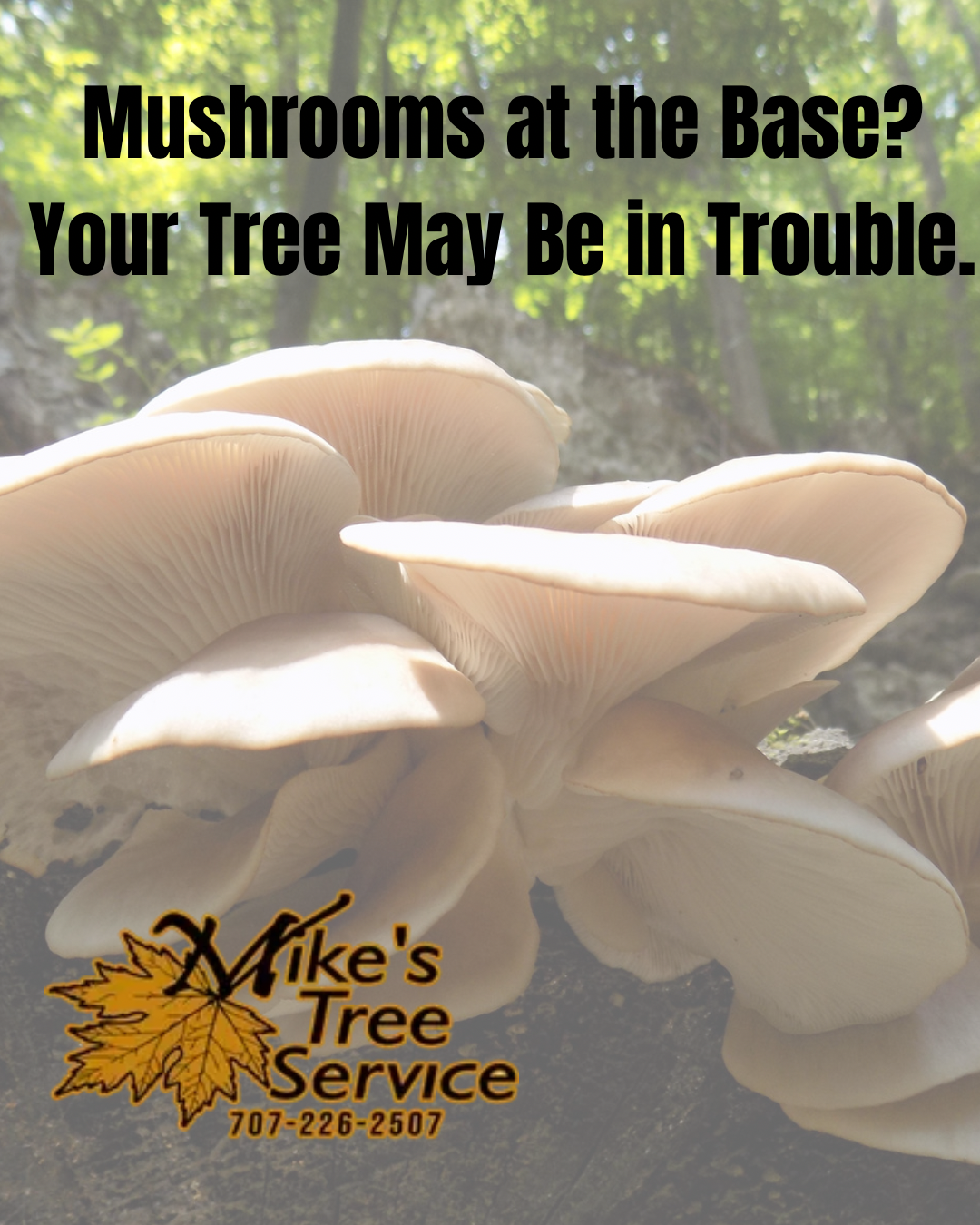
Mushrooms at a tree base can be a visible seasonal clue after meaningful rain. UC IPM notes that Armillaria and other decay fungi may fruit around affected trees or buried roots. Penn State Extension reports that Armillaria mushrooms may appear in autumn near infected roots or buttresses. Photograph the growth because fruiting bodies can be short-lived.
Mushrooms Do Not Confirm Root Rot by Themselves
Fungi may be decomposing a buried stump, old construction wood, mulch, or a dead root rather than the living tree. Do not taste, handle, mow over, or rely on an app to identify an unknown mushroom. Instead, record:
- The mushroom’s color, shape, and approximate size
- Whether it grows from the trunk, root flare, soil, or an old stump
- How far it is from the nearest living tree
- Whether it appears singly, in a ring, or in dense clusters
- The date and recent rainfall
- Any canopy decline, cavities, or leaning on the same tree
Fungal growth combined with structural or canopy symptoms deserves more attention than mushrooms alone. Mike’s Tree Service can compare the evidence with the species, root zone, condition, and nearby targets. Our guide to when a Napa property needs a tree inspection explains other reasons for a professional visit. Do not remove bark or cut roots because doing so can injure the tree and erase evidence.
2. Thinning, Dieback, or Early Color Change in the Canopy
Roots supply water and minerals to the canopy, so root decline may first appear as reduced vigor above ground. Possible dying tree signs include smaller-than-normal leaves, sparse foliage, dead twigs, shortened shoot growth, wilting, or color change that occurs earlier than comparable trees of the same species. The pattern matters because one damaged branch can have a local cause, while decline across the crown may reflect a broader stress. Compare the tree with its own previous seasons and with similar nearby trees rather than relying on a single snapshot.
Canopy symptoms still do not identify root rot by themselves. Drought, heat, pests, irrigation changes, soil compaction, trunk injury, and seasonal behavior can produce similar effects in Napa Valley landscapes. Note when the change began, which side of the canopy is affected, and whether the condition progressed quickly. Mike’s guide to identifying tree stress in Napa Valley can help homeowners organize those observations before requesting an assessment.
3. Soft, Discolored, or Damaged Tissue at the Root Collar
The root collar is the transition where the trunk broadens into major supporting roots. Healthy trees commonly show a visible flare rather than entering the soil like a straight pole. Warning signs can include sunken bark, soft or water-soaked tissue, cavities, cracking, dark discoloration, white fan-like fungal growth beneath already-loose bark, or resin flow on some conifers. Decay in this area matters because it may affect living tissue and the structural connection between the trunk and root system.
Inspect visually without scraping healthy bark or probing deep cavities. A buried flare, deep mulch, soil piled against the trunk, or constant irrigation at the base can keep non-root tissue wet and conceal defects. Penn State Extension notes that a buried root collar can contribute to decay and whole-tree failure. If the flare is not visible or the base feels unstable, ask a qualified tree professional whether careful root-collar evaluation is appropriate.
4. Dark, Soft, or Deteriorating Roots Near the Surface
Visible roots may provide useful context when erosion, landscaping, or an existing opening exposes them naturally. Root tissue that appears soft, water-soaked, stringy, hollow, or darkly discolored may deserve evaluation, especially when healthy-looking roots nearby are firm. Broken or decayed woody roots can reduce anchorage, while loss of fine roots can limit water and nutrient uptake. However, natural root color varies by species, and surface appearance alone does not confirm that tree roots are rotting.
What to Check Without Damaging the Root System
Do not excavate major roots with a shovel, cut samples, or pull bark from attached roots. Safer observations include:
- Existing exposed roots with cracks, cavities, or soft sections
- Recent trenching, grading, driveway work, or utility excavation
- Vehicle traffic or stored materials compacting the root zone
- Irrigation leaks or drainage changes near the tree
- Severed roots visible in an already-open trench
- New pavement lifting combined with declining canopy growth
Construction injury can resemble disease and can also create entry points for decay organisms. Mike’s overview of tree root damage in Napa Valley explains how roots interact with hardscaping, soil, and site changes. Document when the disturbance occurred and whether the tree changed afterward. That timeline can help distinguish an old surface defect from active decline.
5. Persistent Wet Soil, Poor Drainage, or a Buried Flare
Excess moisture fills soil spaces that would otherwise hold oxygen needed by roots. UC IPM notes that excess soil moisture can increase susceptibility to root-decay pathogens, including Phytophthora species. Look for ponding that remains long after nearby soil drains, irrigation directed against the trunk, a leaking valve, saturated mulch, or recent grading that channels runoff into the root zone. In Yountville or St. Helena properties with irrigation serving lawns, vineyards, and ornamental beds, one schedule may not suit every established tree.
Dry-season watering history matters as much as the first rain. Frequent shallow irrigation, water collecting against the root collar, and abrupt drainage changes can create chronic stress before fall weather arrives. Do not stop all water or add fungicide based only on soggy soil because species needs and causes vary. Mike’s rainy-season tree preparation guide offers broader steps for drainage, mulch, inspection, and storm readiness.
6. A New Lean, Cracking Soil, or Root-Plate Movement
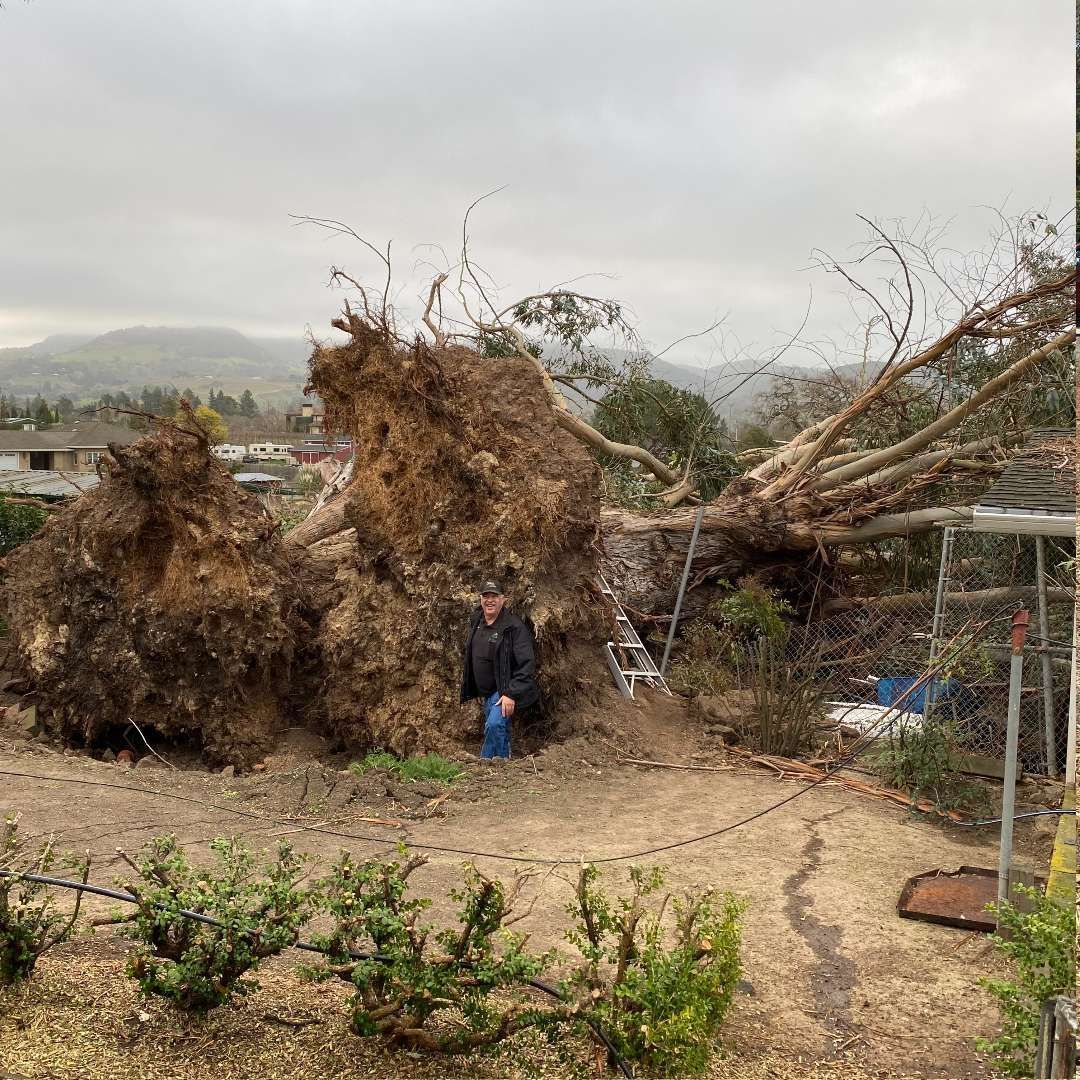
A tree that has grown with a stable lean for years is different from one that changes position after wind or rain. A new lean becomes more concerning when it appears with fresh soil cracks, lifting ground on the opposite side, exposed roots, a widening gap at the base, or movement of the root plate. Wet soil can reduce support, but root decay, severed roots, erosion, and earlier structural damage may also contribute. A tree leaning after rain with visible ground movement should be treated as a potential failure risk, not as a condition to watch casually.
Conditions That Need Prompt Professional Attention
Keep people, pets, vehicles, and outdoor activity away from the likely fall zone when you observe:
- A lean that developed or increased suddenly
- Soil lifting, cracking, or separating around the base
- Roots pulling from the ground
- A tree contacting or threatening a structure or utility line
- Major canopy movement at the base during moderate wind
- Root decay combined with a heavy, unbalanced crown
Do not attempt to pull the tree upright, brace it with a vehicle, cut off the top, or remove roots to inspect them. The International Society of Arboriculture’s homeowner guidance recommends professional assessment when tree health or structural integrity is a concern. An assessment should consider the likelihood of failure, the part likely to fail, what it could strike, and the consequences. If immediate risk is present, professional tree removal may be safer than waiting for another storm.
Decide Whether to Monitor, Correct the Site, Prune, or Remove
No single symptom should determine the outcome. Consider the severity of signs, tree species, targets, root-zone history, canopy condition, and speed of change. Use this sequence:
- Document the evidence. Photograph the base, canopy, soil, mushrooms, and any visible movement without entering a hazardous area.
- Compare timing and patterns. Note rain, irrigation changes, construction, pruning, and whether similar trees show the same seasonal response.
- Identify nearby targets. Consider homes, parking, walkways, play areas, roads, vineyard facilities, and utility lines.
- Separate health from stability. A stressed tree may be stable, while a green tree with decayed roots may still present structural risk.
- Choose the least extensive safe action. Monitoring or site correction may be reasonable for low-risk conditions, while confirmed instability can require removal.
| Observed condition | Reasonable next step | What would increase urgency |
|---|---|---|
| Mushrooms with no other tree symptoms | Photograph, identify source, and monitor or assess | Fruiting bodies attached to roots plus cavities or decline |
| Wet soil with a sound, stable tree | Correct drainage or irrigation after diagnosis | Worsening vigor, root-collar damage, or movement |
| Gradual canopy decline | Tree-health and root-zone assessment | Rapid dieback, extensive decay, or nearby targets |
| Localized deadwood with stable roots | Appropriate pruning after assessment | Large dead limbs over occupied areas |
| New lean or moving root plate | Restrict access and obtain prompt risk assessment | Structure, road, utility, or people within fall zone |
| Extensive root decay and poor anchorage | Evaluate removal and site protection | Wind, saturated soil, or active movement |
Mike’s Tree Service offers free, no-obligation estimates for tree trimming, removal, stump grinding, and related work, but a formal arborist consultation or written risk report can be a different scope. For independent market context, HomeGuide’s current 2026 arborist cost guide reports the national ranges below. These figures are not Mike’s Tree Service prices, guarantees, or Napa Valley quotes. Tree size, access, condition, equipment, targets, testing, cleanup, permits, and urgency can materially change the final cost.
Estimated 2026 Market Context
| Service or scope | Published market range | Common cost variables |
|---|---|---|
| Mike’s Tree Service project estimate | Free | Requested service, property access, and visible scope |
| Tree inspection or risk assessment | $100–$250 | Complexity, number of trees, travel, and testing |
| Single-tree consultation and report | $150–$450 | Documentation requirements and assessment depth |
| Tree pruning | $200–$800 per tree | Height, canopy density, access, and risk |
| Tree removal | $400–$1,200 per tree | Size, condition, targets, equipment, and cleanup |
Frequently Asked Questions
Do mushrooms at the base of a tree always mean root rot?
No. Mushrooms may grow from buried wood, mulch, old stumps, or dead roots without proving that the nearby living tree is infected. Photograph their location and check for canopy decline, cavities, root-collar damage, or movement before drawing a conclusion.
Can a tree with root rot be saved?
That depends on the cause, extent of decay, affected roots, tree species, site conditions, and structural risk. Some environmental stresses can be corrected, but lost structural wood cannot simply be restored. An assessment should determine whether treatment, monitoring, pruning, or removal is realistic.
Should I dig around the roots to check for decay?
Not with ordinary tools. Digging can sever important roots, destabilize soil, spread pathogens, or create new wounds. A professional may recommend careful root-collar excavation or testing when the information will change the management decision.
Why might a tree lean more after heavy rain?
Saturated soil can provide less resistance while wind applies force to the canopy. If roots are decayed, cut, eroded, or poorly developed, the root plate may begin moving. A new lean accompanied by soil cracking or lifting requires prompt professional attention.
Is canopy thinning enough to diagnose tree root rot?
No. Canopy thinning can result from drought, pests, disease, compaction, irrigation problems, trunk damage, or normal seasonal behavior. Root rot becomes more plausible when canopy decline appears with base decay, fungal growth, damaged roots, persistent wet soil, or new instability.
What should I document before requesting an assessment?
Collect useful information without entering the potential fall zone:
- Photos of the entire tree, base, canopy, and surrounding soil
- Close views of mushrooms, cavities, cracks, or exposed roots
- Dates of new symptoms and recent rain or wind
- Irrigation, trenching, grading, or construction changes
- Previous pruning, storm damage, or tree reports
- Nearby structures, roads, utilities, and occupied areas
Clear documentation helps the tree professional understand timing and decide what requires closer inspection.
Protect Your Napa Valley Property Before the Rainy Season
Recognizing the signs of root rot in trees is about finding patterns, not labeling a tree from one symptom. Mushrooms, canopy decline, root-collar damage, deteriorating roots, persistent wet soil, and new movement become more meaningful when several appear together. Early observation gives homeowners time to correct a site issue, arrange assessment, plan pruning, or prepare for removal before wet soil and wind increase the consequences. It also helps avoid unnecessary work on trees that are stressed but still structurally sound.
Mike’s Tree Service has cared for Napa Valley properties since 1968, serving homeowners and businesses in Napa, Yountville, St. Helena, Calistoga, and nearby communities. We evaluate the tree, its root zone, surrounding targets, and practical service options before recommending the next step. Review our tree trimming services when deadwood or canopy balance needs attention, or our tree removal services when a tree cannot remain safely. To discuss the symptoms you have found and request a free project estimate, contact Mike’s Tree Service.
Tree Root Damage in Napa Valley