Tree Removal in Napa Valley: When It's the Right Call and What to Expect
If you have a tree on your Napa Valley property that's been on your mind — declining, leaning, damaged, or simply too close to your home or vineyard — the decision of whether to remove it is one that deserves a professional answer, not a guess. Tree removal in Napa Valley is more complex than in most regions: strict county regulations protect native oak woodlands, steep terrain creates access challenges, fire risk management requirements shape when and how removal happens, and the valley's Mediterranean climate creates specific disease and drought-stress patterns that determine whether a tree can be saved or needs to come down. Mike's Tree Service has provided certified tree removal throughout Napa Valley, St. Helena, Calistoga, and surrounding wine country for years. This guide gives you the framework to make a confident decision — and know exactly what to expect if removal is the right call.
When Does a Tree Actually Need to Be Removed in Napa Valley?
The first question a qualified Napa Valley arborist should help you answer — and the answer isn't always removal. Here's the decision framework:
| Situation | Right Call | Why |
|---|---|---|
| More than 50% of the tree is dead | Remove | The structural integrity is too compromised to maintain safely |
| Large vertical trunk cracks or severe lean | Remove | Imminent failure risk — especially near structures or in fire-prone areas |
| Severe root rot confirmed by assessment | Remove | Root system can no longer support the tree safely |
| Small areas of deadwood, otherwise healthy | Prune | Targeted removal of dead branches restores health without losing the tree |
| Branches near power lines or roofline | Prune | Structural clearance — tree itself is healthy |
| Minor early signs of disease or insect activity | Treat / Monitor | Many issues are manageable if caught early — consult a certified arborist |
| Fire-damaged oak with viable cambium | Wait and assess | Native oaks can recover from moderate fire damage — evaluate 2 to 3 weeks post-fire before deciding |
Napa-specific considerations:
Fire risk management — Fire-damaged oaks and redwoods that appear dead may still be viable if the cambium layer under the bark shows pink or white coloring rather than dark or yellow. Structural hazards near roads and homes require immediate action regardless of recovery potential. For tree health assessment connected to seasonal fire preparedness, our [summer tree care guide](link to summer tree care blog) covers what to monitor through Napa's dry season.
Drought and disease — Valley Oak decline often appears as sudden leaf drop, canopy dieback, or fungal cankers on the bark. Drought-stressed trees show significant canopy thinning that can be confused with natural seasonal variation. When in doubt, a certified arborist assessment is always the right first step.
Permitting — Napa County regulations frequently require permits before removing native oak species. Mike's Tree Service navigates this process for every removal that falls under county conservation guidelines.
Common Reasons Napa Valley Homeowners Need Tree Removal
Napa Valley's specific combination of climate, ecology, and land use creates tree removal needs that are distinct from most California communities:
| Reason | Napa Valley Context |
|---|---|
| Sudden Oak Death (SOD) | This pathogen has killed over a million oaks and tanoaks in California — infected trees die rapidly and become structural hazards that require prompt removal |
| Drought stress and mortality | Prolonged drought combined with high temperatures has accelerated mortality across the valley — weakened trees become prime targets for Mediterranean Oak Borer and bark beetle infestation |
| Fire risk and defensible space | Proactive removal of flammable vegetation is essential for home protection in rural Napa where high fire risk is a year-round concern |
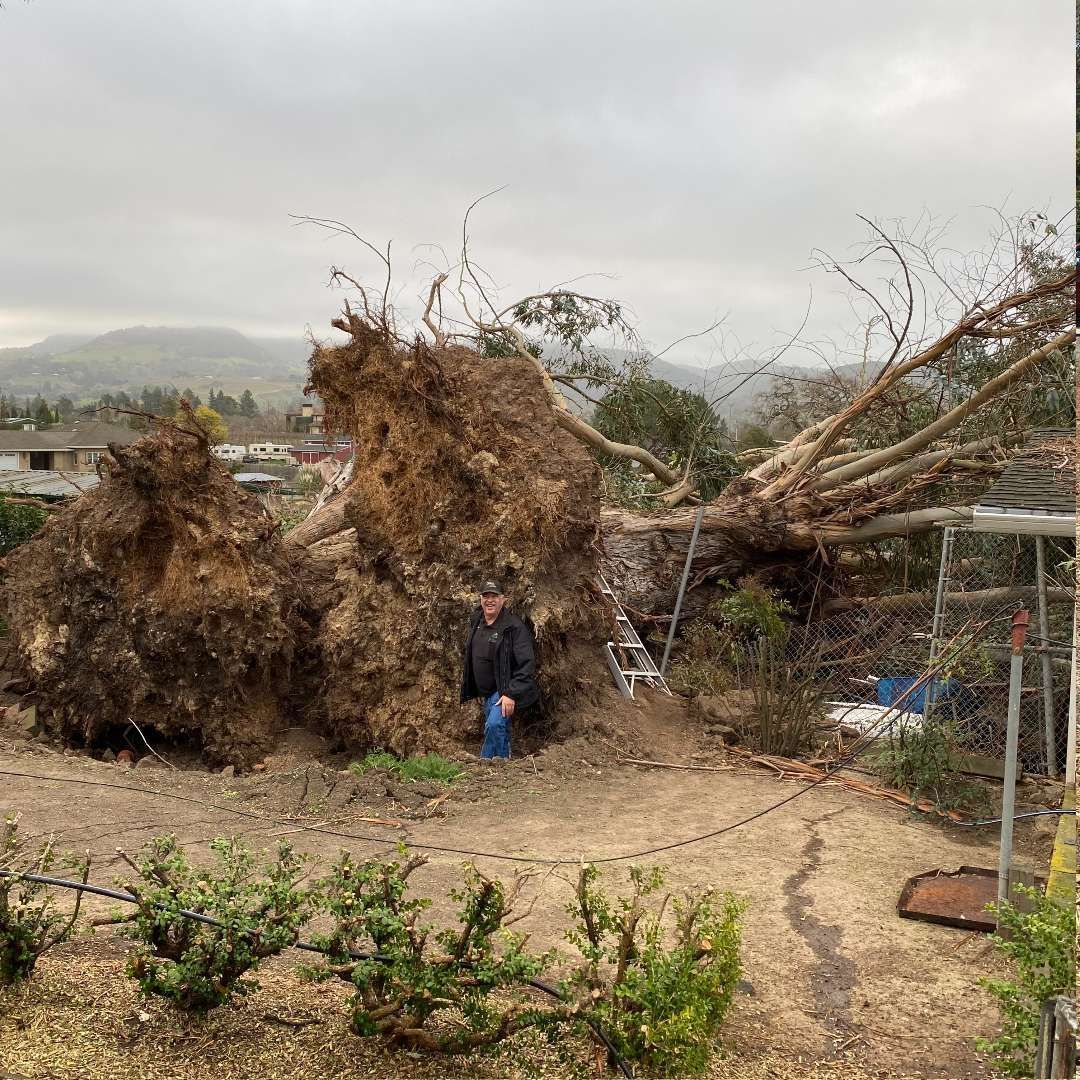
| Storm and wind damage | High winds and heavy winter rains frequently damage already-weakened trees — emergency removal prevents falls onto homes, outbuildings, and vineyard infrastructure |
| Proximity to structures and vineyard systems | Trees too close to homes, wineries, power lines, or vineyard trellis systems create ongoing liability and operational risk |
| Oak wilt and invasive pests | Fungal diseases and bark beetle infestations kill trees and require prompt removal to prevent spread to neighboring healthy trees |
Resources for Napa Valley homeowners concerned about Sudden Oak Death:
- Visit SuddenOakDeath.org for identification and management guidance
- Participate in the SOD Blitz survey program for early detection in your area
- Consult Mike's Tree Service for a certified arborist assessment if you're seeing canopy thinning, leaf drop, or bark cankers on your oaks
Why Tree Removal in Napa Valley Is More Complex Than Most Regions
This is the part that catches out-of-area crews and uncertified operators — Napa Valley's regulatory, ecological, and terrain factors make tree removal here genuinely more demanding:
Strict regulatory environment Napa County Conservation Regulations frequently require protecting at least 60% of existing tree canopy and may mandate replacement ratios of 3:1 or higher for removed native oaks. Permits are commonly required before any native oak removal — and the consequences of removing a protected tree without proper authorization are significant. Mike's Tree Service handles all permit applications and county coordination as part of every qualifying removal.
Topography and access challenges Napa Valley's steep, mountainous terrain creates access difficulties that flat-ground tree crews simply don't encounter. Rocky hillsides, narrow canyon properties, and terrain adjacent to sensitive watersheds require specialized rigging, careful machinery placement, and soil erosion management that demands real local experience.
Agricultural conflicts and vineyard proximity Many Napa Valley properties involve the intersection of residential tree care and active agricultural operations. Removals near vineyard trellis systems, irrigation infrastructure, and wine country property boundaries require a level of care and coordination that goes well beyond standard residential tree work.
Fire hazard management within ecological constraints High-severity fire zones require strategic removal to reduce fuel loads — but that removal must be balanced against county conservation guidelines and habitat protection requirements. Local arborists who understand both sides of that balance are essential in Napa Valley.
What to Look for When Hiring a Tree Removal Company in Napa Valley
Napa Valley's combination of protected species, complex terrain, and regulatory requirements makes hiring the right company more important here than in most markets. Use this checklist before signing anything:
| What to Verify | Why It Matters in Napa Valley |
|---|---|
| ISA Certified Arborist on staff | Confirms expert knowledge of tree biology, risk assessment, and Napa's specific species — not just chainsaw operation |
| General liability insurance | Protects your home and property from damage during removal |
| California worker's compensation | Mandatory in CA for any company with employees — without it you may be liable for on-site injuries |
| Local species and permit knowledge | Napa's native oak protections require local regulatory expertise — out-of-area crews often don't know what requires a permit |
| Detailed written estimate | Must include specific scope of work, equipment, cleanup plan, stump grinding status, and total pricing — not a verbal ballpark |
| Local references | Recent work in Napa Valley specifically — not just California generally |
Red flags to watch for in Napa Valley:
- Crews appearing door-to-door immediately after a storm event — particularly those with out-of-state plates
- Full payment demanded upfront — professional companies collect a deposit (typically no more than 25%) with final payment on completion
- Vague cash-only deals with no written estimate
- Workers using ladders on large trees instead of proper rigging equipment
- No Certificate of Insurance provided when requested
What Does Tree Removal Cost in Napa Valley?
Tree removal costs in Napa Valley typically range from $500 to $3,000+ per tree depending on size, species, access, and condition. Here's a size-based breakdown:
| Tree Size | Typical Cost Range |
|---|---|
| Small (under 30 ft) | $150–$600 |
| Medium (30–60 ft) | $420–$1,600 |
| Large (60–80 ft) | $1,200–$2,200 |
| Extra-large or hazardous (over 80 ft) | $2,000+ |
- What drives cost up in Napa Valley specifically:
| Cost Factor | Impact |
|---|---|
| Species | Hardwoods like native oaks cost more to cut and chip than softer species — complex limb structures increase labor time |
| Access and terrain | Steep lots, proximity to structures or vineyard systems, and rigging requirements increase cost significantly |
| Tree health | Dead or diseased trees are more dangerous to climb and dismantle — additional precautions increase labor cost |
| Debris disposal | Hauling large trunks or extensive brush is typically an additional cost beyond the base removal quote |
| Permit requirements | Native oak removals may require county permit fees and mitigation plantings |
- Stump grinding is almost always a separate service — typically $100 to $600+ depending on diameter, averaging $3 to $10 per diameter inch. Confirm whether it's included in your quote before signing.
What Happens After the Tree Is Removed — Stump, Debris, and Site Cleanup
Setting expectations for what comes after removal helps Napa Valley homeowners plan their site properly:
Stump grinding and initial cleanup Professional stump grinding reduces the stump to 6 to 12 inches below grade, converting wood into chips. Grindings are typically left on site as mulch or hauled away for an additional fee — your choice. The area is leveled and cleared of debris, eliminating tripping hazards and creating a clean work surface.
Soil settling and decomposition Remaining roots and wood chips continue decomposing over months to years after grinding — expect the ground to settle 4 to 6 inches over 6 to 12 months as wood breaks down. Additional topsoil or compost may be needed to maintain level grade with surrounding ground.
Napa-specific soil considerations Napa soils range from heavy clay to stony volcanic — both require specific preparation before replanting. Wood chip decomposition temporarily ties up nitrogen in the soil, so soil testing and nitrogen-rich amendment are recommended before any new planting in the removal area. If you have heavy clay, the removal area is an opportunity to improve drainage with organic matter amendment before replanting.
Replanting guidance for Napa Valley:
- Wait for soil to settle or amend thoroughly before replanting in the same spot
- Avoid replanting in the exact location immediately — residual root diseases can affect new plantings
- Consider drought-tolerant native species suited to Napa's climate — Valley Oaks, Coast Live Oaks, and native maples are strong choices
- Removed wood can be converted to mulch for vineyard rows or garden beds
For timing your replanting around Napa Valley's seasonal conditions, our
tree fertilization guide covers soil preparation and nutrient needs by species.
Serving Napa Valley, St. Helena, Calistoga, and Surrounding Wine Country
Mike's Tree Service provides certified tree removal and tree care services throughout the greater Napa Valley area:
- Napa Valley — Napa, Yountville, and Oakville
- Up-Valley — St. Helena, Rutherford, and Calistoga
- Surrounding Wine Country — Angwin, Deer Park, Pope Valley, and American Canyon
For homeowners searching for tree removal near me in the Napa area — Mike's Tree Service is your locally owned, ISA certified answer with direct knowledge of Napa County's species, regulations, and terrain.
Why Napa Valley Homeowners Trust Mike's Tree Service for Tree Removal
There are tree services that will show up in Napa Valley after a storm or a Google search. Mike's Tree Service is different — and the difference matters on a property where one wrong cut can trigger a county violation, damage a vineyard operation, or put an uninsured worker at risk on your land.
Here's what you get with every Mike's Tree Service removal:
| What We Offer | What It Means for You |
|---|---|
| ISA Certified Arborists | Removal is recommended only when it's genuinely the right call — we assess first |
| Full California licensing and insurance | General liability and worker's compensation protects your property and eliminates your personal liability |
| Napa County regulatory expertise | We handle permit applications, oak protections, and county coordination for every qualifying removal |
| Local species knowledge | We know Valley Oaks, Coast Live Oaks, vineyard-adjacent species, and Napa's specific disease pressures |
| Complete service | Removal, stump grinding, debris cleanup, and site prep — one call handles everything |
| Transparent written estimates | Detailed itemized quotes — no verbal ballparks, no cash-only deals, no surprise fees |
Don't leave a hazardous tree standing another season. Contact Mike's Tree Service today for your Napa Valley tree removal assessment.
Schedule Your Free Tree Removal Assessment →
Read: Summer Tree Care in Napa Valley →